The phrase “gild the lily” is a popular English idiom that means adding unnecessary decoration, improvement, or extra details to something that is already beautiful, perfect, or attractive. It is often used when someone tries to make something better even though it does not need any additional changes. For example, if a cake is already beautifully decorated, adding more icing, flowers, and toppings might be an attempt to gild the lily.
Understanding the meaning of gild the lily can help English learners use this expression naturally in everyday conversations, writing, and professional communication. Although the phrase sounds unusual, it has a simple message: sometimes, adding more is unnecessary and can even make something worse. In this guide, you will learn its definition, origin, correct usage, practical examples, similar expressions, and common mistakes.
Quick Answer: What Does Gild the Lily Mean?
Gild the lily means to add unnecessary decoration or improvements to something that is already beautiful, attractive, or good enough. It suggests that additional changes are excessive and unnecessary. The expression is commonly used when someone adds extra features, details, or embellishments that do not improve the original thing.
Why Do People Confuse Gild the Lily?
People sometimes misunderstand this idiom because its literal meaning differs from its figurative meaning.
- Gild means to cover something with a thin layer of gold or make it look golden.
- Lily refers to a beautiful flowering plant.
- Gild the lily literally suggests decorating an already beautiful flower with gold.
The confusion comes from imagining that the expression describes an actual decorating activity. However, it is generally used figuratively to describe unnecessary improvements or excessive decoration.
Another reason for confusion is that people sometimes use it positively, thinking it means making something more beautiful. Although it can describe an attempt to improve something, it usually suggests that the improvement is unnecessary.
First Word: Gild
Gild is a verb that means covering something with a thin layer of gold or giving it a golden appearance.
It can also mean making something appear more attractive, valuable, or impressive.
Examples:
- The artist decided to gild the wooden frame.
- The designer used gold paint to gild the decorative details.
- The palace walls were gilded with gold leaf.
- The company tried to gild its public image with impressive advertisements.
Synonyms of gild:
- Decorate
- Embellish
- Adorn
- Gold-plate
- Beautify
Second Word: Lily
A lily is a flowering plant known for its attractive flowers and pleasant appearance. Lilies come in different colors, including white, pink, yellow, and orange.
The word lily is important in this idiom because the flower represents something that is already beautiful.
Examples:
- A white lily stood in the middle of the garden.
- She placed a beautiful lily in a glass vase.
- The wedding decorations included fresh lilies.
- The garden was filled with colorful lilies.
Related words:
- Flower
- Blossom
- Bloom
- Petal
- Plant
Gild the Lily: Comparison Table
| Expression | Meaning |
|---|---|
| Gild the lily | Add unnecessary decoration or improvements |
| Gild something | Cover something with gold |
| Decorate | Make something more attractive |
| Embellish | Add decorative details |
| Overdo it | Do something excessively |
| Improve | Make something better |
The main difference is that gild the lily usually suggests that something is already good enough and does not need additional decoration or improvement.
When Should You Use Gild the Lily?
Use this idiom when someone adds unnecessary details, decorations, features, or improvements to something that is already attractive or satisfactory.
Here are some common situations where the expression fits naturally.
1. Decorating
When a room, dress, cake, or other object already looks beautiful, additional decorations may be unnecessary.
Example: The living room looks perfect. Adding more furniture would be gilding the lily.
2. Writing and Editing
When a piece of writing is already clear and effective, adding extra words may weaken it.
Example: Your introduction is excellent. Adding another paragraph would gild the lily.
3. Business and Marketing
When a product or service already has enough features, adding unnecessary features may complicate it.
Example: The software works perfectly. Adding more features would gild the lily.
4. Personal Appearance
When someone already looks attractive, excessive accessories or makeup may be unnecessary.
Example: She already looks wonderful. Wearing more jewelry would be gilding the lily.
15 Examples of Gild the Lily in Sentences
The best way to understand an idiom is to see how people use it in different situations.
- The cake was already beautiful, so adding more decorations would gild the lily.
- Your presentation is excellent; there is no need to gild the lily.
- The garden looks wonderful without additional flowers.
- Adding expensive furniture to this elegant room would be gilding the lily.
- The original design is simple and attractive, so extra details might gild the lily.
- Her natural beauty needs no extra makeup to gild the lily.
- The movie was already entertaining, and the additional scenes only gilded the lily.
- The restaurant’s interior is beautiful, so more decorations would gild the lily.
- His speech was powerful, and adding unnecessary jokes would gild the lily.
- The website is already easy to use, so adding more buttons would gild the lily.
- The gift was beautifully wrapped, and another ribbon would simply gild the lily.
- The painting looks complete; adding more colors would gild the lily.
- We should keep the report simple instead of gilding the lily with unnecessary information.
- The wedding ceremony was already perfect, so extra arrangements would have gilded the lily.
- The designer decided not to gild the lily because the original outfit was already elegant.
Common Mistakes When Using Gild the Lily
English learners sometimes make mistakes when using this expression. Understanding these errors will help you use the idiom correctly.
1. Taking the Idiom Literally
Incorrect: She gilded the lily, meaning she planted more flowers.
Correct: She added unnecessary decorations to an already beautiful arrangement, gilding the lily.
2. Thinking It Always Means Improvement
The expression does not simply mean making something better. It usually suggests that the additional effort is unnecessary.
Incorrect meaning: Making something better in every possible way.
Correct meaning: Adding unnecessary improvements to something that is already good.
3. Using the Wrong Verb Form
Because gild is a regular verb, its forms are:
- Present: Gild
- Past: Gilded
- Present participle: Gilding
Examples:
- Don’t gild the lily.
- He gilded the lily.
- She is gilding the lily.
4. Forgetting the Article
The established idiom is generally written as gild the lily, not simply gild lily.
5. Using It in Every Situation
The phrase is most appropriate when something is already attractive, successful, or satisfactory. It is not a general expression for every kind of improvement.
Memory Trick: How to Remember Gild the Lily
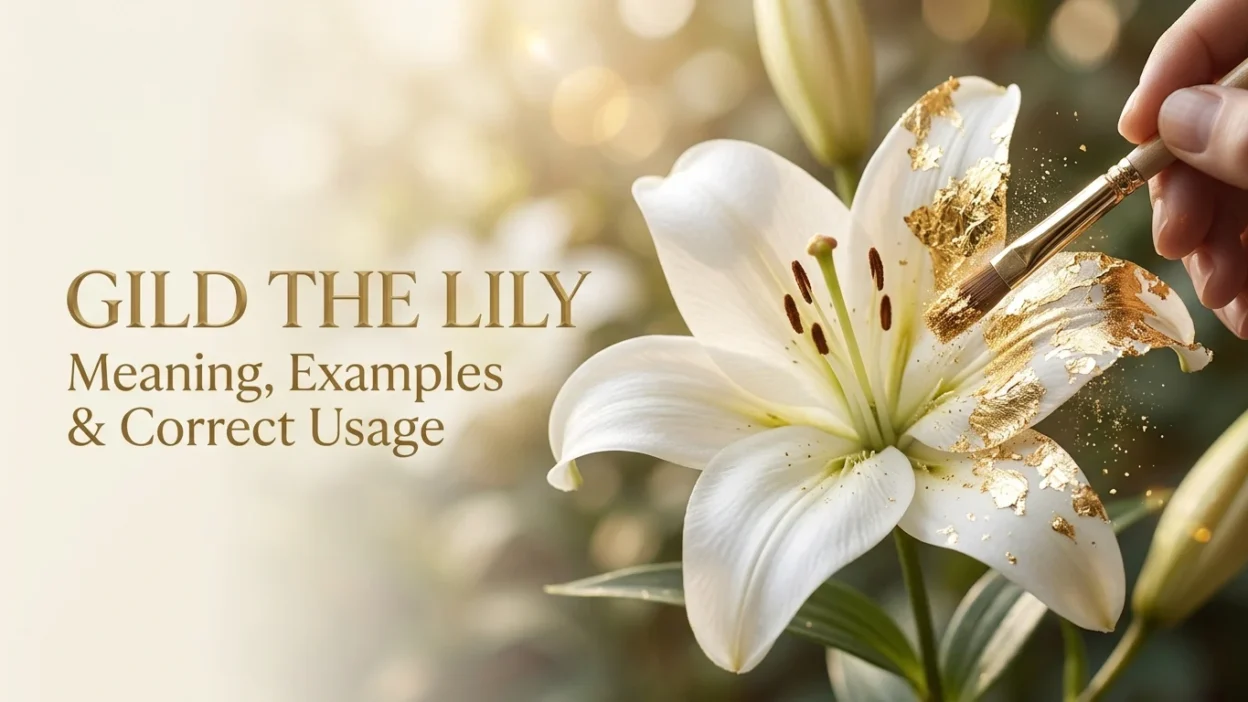
An easy way to remember this idiom is to imagine a beautiful white lily covered with gold.
A lily is already attractive, so covering it with gold is unnecessary.
Remember:
- Gild = Cover with gold.
- Lily = A beautiful flower.
- Gild the lily = Add unnecessary decoration to something already beautiful.
Think of this simple sentence:
“Don’t add gold to a beautiful flower that already looks perfect.”
This image will help you remember the figurative meaning.
Gild the Lily in American vs British English
The idiom gild the lily is understood in both American and British English.
There is no significant difference in its meaning or basic usage between the two varieties of English.
| Feature | American English | British English |
|---|---|---|
| Meaning | Unnecessary improvement | Unnecessary improvement |
| Spelling | Gild the lily | Gild the lily |
| Usage | Commonly understood | Commonly understood |
| Tone | Figurative and conversational | Figurative and conversational |
Both American and British speakers can use the expression in conversations, articles, reviews, and professional writing.
American English example: Adding more graphics to the presentation would gild the lily.
British English example: The garden is already lovely; adding more decorations would gild the lily.
Similar Words and Expressions to Gild the Lily
Several English expressions have meanings similar to gild the lily. However, their exact meanings and situations may differ.
1. Overdo It
To do something more than necessary.
Example: You have already added enough decorations. Don’t overdo it.
2. Go Overboard
To do or add something excessively.
Example: They went overboard with the wedding decorations.
3. Overembellish
To add too many decorative details.
Example: The designer tends to overembellish simple dresses.
4. Overkill
More effort, action, or resources than necessary.
Example: Hiring ten people for such a small project would be overkill.
5. Add Insult to Injury
To make an already bad situation even worse.
Example: Losing his job was difficult, and having his friends criticize him added insult to injury.
6. Put a Cherry on Top
To add something extra that makes an already good thing even better.
Example: The free dessert was the cherry on top of a wonderful dinner.
Notice that these expressions are not perfect synonyms. For example, “put a cherry on top” is usually positive, while “gild the lily” often suggests unnecessary additions.
Final Verdict: What Does Gild the Lily Mean?
Gild the lily is an English idiom that means adding unnecessary decoration, details, or improvements to something that is already beautiful, attractive, or satisfactory.
It is commonly used in conversations about decorating, writing, fashion, business, presentations, and personal appearance.
The expression reminds us that adding more is not always better. Sometimes, simplicity is the best choice.
FAQs:
1. What is the meaning of gild the lily?
Gild the lily means adding unnecessary decoration or improvements to something that is already beautiful or good enough. It suggests that extra effort or embellishment is not needed.
2. Is gild the lily a positive or negative expression?
It is generally a mildly negative or critical expression. It suggests that someone is adding unnecessary details or making excessive improvements. However, it can also be used humorously or gently.
3. What is an example of gild the lily?
An example is: “The wedding cake is already beautiful, so adding more flowers and decorations would gild the lily.”
It means the cake does not need any additional decoration.
4. Where does the phrase gild the lily come from?
The expression is associated with William Shakespeare’s play King John. The line “To gild refined gold, to paint the lily” appears in Act 4, Scene 2. The familiar expression developed from this idea of unnecessarily decorating something already beautiful.
5. Is gild the lily an idiom?
Yes, gild the lily is an English idiom. Its figurative meaning is different from the literal meanings of its individual words. It describes unnecessary decoration or improvement.
6. What is another way to say gild the lily?
Some alternatives include:
- Overdo it
- Go overboard
- Overembellish
- Add unnecessary details
- Do more than necessary
The best alternative depends on the situation.
7. Can I use gild the lily in professional writing?
Yes. You can use it in professional writing when discussing unnecessary additions to reports, presentations, designs, products, or business processes.
Example: “The report is already clear and informative, so adding more details would gild the lily.”
Remember This
- Gild means to cover something with gold.
- Lily is a beautiful flowering plant.
- Gild the lily means adding unnecessary decoration or improvements.
- It is an idiom, not usually a literal instruction.
- It is understood in both American and British English.
- The expression often reminds us that less can be more.
Conclusion
The idiom gild the lily is a useful English expression for describing unnecessary decoration or improvements. It is used when something is already attractive, beautiful, or satisfactory, and adding more details does not make it significantly better. Learning this phrase can help you express ideas more naturally in everyday conversations and professional writing.
Remember that the expression is not simply about making something beautiful. It is about recognizing when something is already good enough. If you are discussing a presentation, a wedding cake, a garden, or a business project, gild the lily is a natural way to explain why additional changes may be unnecessary.