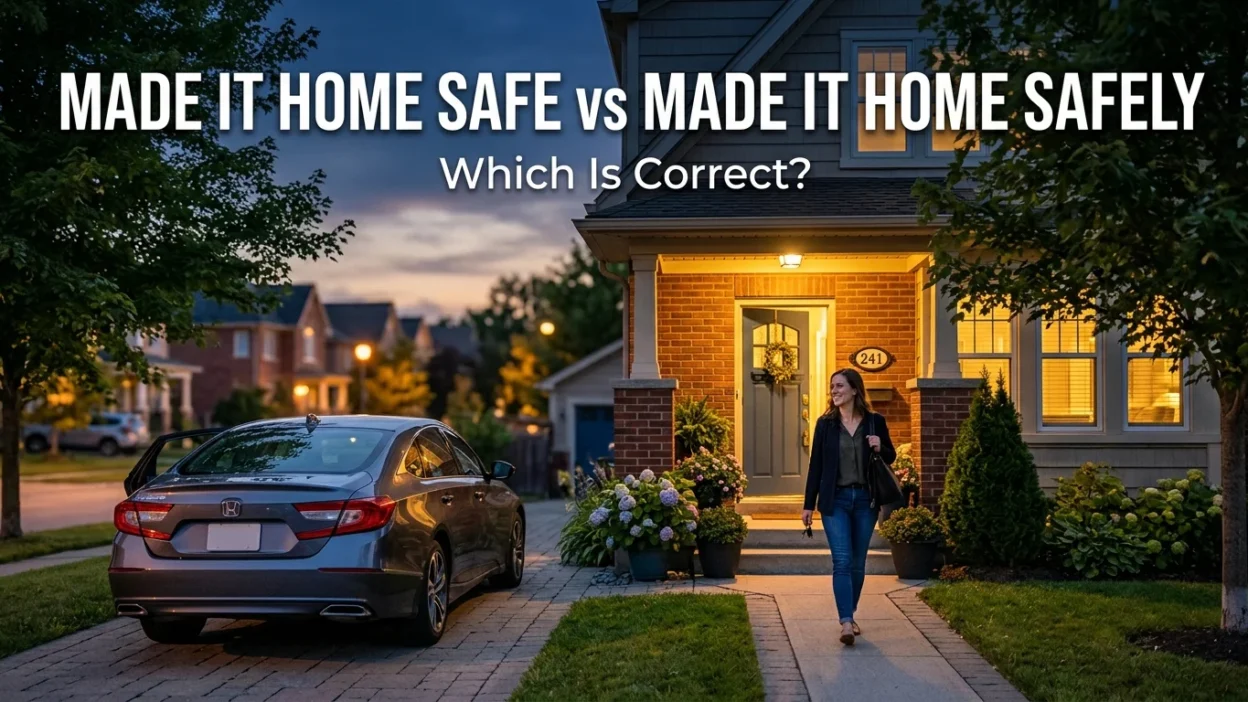
If you are unsure if to say “made it home safe” or “made it home safely,” you are not alone. Both expressions are common in everyday English, but they work a little differently. The confusion comes from the fact that safe is normally an adjective, while safely is an adverb.
In standard grammar, “made it home safely” is the clearest and most traditionally grammatical choice when you mean that someone arrived home without danger or problems. However, “made it home safe” is also widely used, especially in informal American English. In this expression, safe functions as a complement describing the person after they arrived. Both can sound natural, but context and style matter.
Quick Answer
“Made it home safely” is the safest choice in formal and standard writing because safely is an adverb describing how someone arrived home. “Made it home safe” is also common and natural in informal conversation, especially in American English. Use safely when you want the most conventional grammatical form.
Why Do People Confuse “Made It Home Safe” and “Made It Home Safely”?
The confusion comes from the unusual structure of the phrase “make it home.”
Normally, an adverb describes a verb:
- She arrived safely.
- He drove carefully.
- They returned quickly.
So it is natural to think:
However, English also allows safe to describe the person or people who successfully reached their destination
Here, safe does not simply describe the action of making it home. It describes the condition of the people who made it home.
What Does “Safe” Mean?
Safe is an adjective. It means protected from danger, harm, or injury.
Examples:
- The children are safe.
- I am safe at home.
- We arrived safe.
- She made it home safe.
When used after “made it home,” safe can describe the person’s condition upon reaching home.
“Safe” in a Sentence
This is natural in casual conversation and means:
What Does “Safely” Mean?
Safely is an adverb formed from the adjective safe.
It means in a safe manner or without danger.
Examples:
- He drove safely.
- They returned safely.
- She landed safely.
- We made it home safely.
In “made it home safely,” the word safely explains how the person reached home.
“Safely” in a Sentence
This means the person successfully arrived home without harm or danger.
Made It Home Safe vs Made It Home Safely: Comparison Table
| Expression | Grammar | Meaning | Typical Use |
|---|---|---|---|
| Made it home safe | Adjective/complement | Arrived home in a safe condition | Informal conversation |
| Made it home safely | Adverb | Arrived home without danger | Standard and formal writing |
| Got home safe | Adjective/complement | Arrived home safely | Very common informal speech |
| Got home safely | Adverb | Arrived home without danger | Standard English |
When Should You Use “Made It Home Safe”?
Use “made it home safe” when speaking casually or writing an informal message.
It is especially natural when expressing concern or relief:
These sentences are common in everyday conversation.
When Should You Use “Made It Home Safely”?
Use “made it home safely” when you want the conventional adverbial form.
It works well in:
- Formal writing
- Professional communication
- Academic writing
- Careful edited English
- Situations where grammatical clarity matters
For example:
10+ Examples of “Made It Home Safe”
- I’m glad you made it home safe.
- Did you make it home safe last night?
- Text me when you make it home safe.
- I hope you made it home safe.
- She finally made it home safe after the long trip.
- Let me know when you make it home safe.
- We all made it home safe before the rain started.
- He called to say he had made it home safe.
- I was worried, but they made it home safe.
- Thanks for checking on me. I made it home safe.
- Make sure you text me when you make it home safe.
10+ Examples of “Made It Home Safely”
- I’m glad you made it home safely.
- Did you make it home safely?
- Please text me when you make it home safely.
- I hope you made it home safely.
- She made it home safely after the long journey.
- We all made it home safely.
- He called to tell us that he had made it home safely.
- They made it home safely despite the bad weather.
- I was relieved to hear that you made it home safely.
- Everyone made it home safely before the storm arrived.
- Please let me know once you make it home safely.
Common Mistakes
Mistake 1: Assuming “safe” is always wrong
Some learners think safe must be replaced with safely every time it follows a verb.
That is too simple. “Made it home safe” is an established informal construction.
Mistake 2: Thinking “safely” changes the meaning completely
The two expressions generally communicate the same basic idea: someone reached home without harm or danger.
The main difference is grammatical form and register.
Mistake 3: Using “safe” in formal writing without considering style
Although “made it home safe” is natural in conversation, “made it home safely” is generally a better choice for formal or carefully edited writing.
Mistake 4: Confusing “safe” with “safely”
Remember:
- safe = adjective
- safely = adverb
Compare:
Memory Trick
Think of the difference this way:
Safe = condition
Safely = manner
If you are describing someone’s condition, use safe.
If you are describing how they arrived, use safely.
For formal writing, remember:
American vs British English
Both “made it home safe” and “made it home safely” can be heard in American English.
The shorter safe version is particularly common in casual speech and informal messages.
British English also uses safe in informal expressions, although safely remains the straightforward standard adverb.
The important distinction is not that one form belongs exclusively to American English and the other exclusively to British English. Instead, register and context are more useful considerations.
Similar Words
Several expressions can communicate the same general idea.
Got Home Safe
This is very common in casual conversation.
Got Home Safely
This is the conventional adverbial version.
Arrived Home Safely
This sounds slightly more formal and is useful in writing.
Returned Home Safely
This is another clear and standard alternative.
Reached Home Safely
This is grammatical, although “got home safely” or “made it home safely” may sound more natural in many everyday contexts.
Final Verdict
“Made it home safely” is the most straightforward choice when you want standard, polished English.
“Made it home safe” is also natural, particularly in informal conversation and personal messages. It uses safe as a complement describing the person after reaching home.
So:
- Formal/standard: “I’m glad you made it home safely.”
- Informal/conversational: “I’m glad you made it home safe.”
Neither expression is likely to confuse a native English speaker.
FAQs:
Is “made it home safe” grammatically correct?
Yes. “Made it home safe” is a common informal construction in English. Here, safe functions as a complement describing the person’s condition after reaching home.
Is “made it home safely” correct?
Yes. “Made it home safely” is grammatically standard, with safely functioning as an adverb describing the manner of reaching home.
Should I say “made it home safe” or “made it home safely”?
Both are used. Choose “made it home safely” for formal or polished writing and “made it home safe” for casual conversation or texting.
Is “got home safe” correct?
Yes. “Got home safe” is widely used in informal English. For formal writing, “got home safely” is the more conventional form.
Is “made it home safely” more formal?
Generally, yes. Safely is the standard adverb, so the expression tends to fit formal and edited writing more comfortably.
Can I say “I made it home safe”?
Yes. It is a natural informal sentence meaning that you successfully arrived home without harm or danger.
What is the difference between “safe” and “safely”?
Safe is normally an adjective, while safely is an adverb. Safe can describe a person’s condition, while safely can describe how an action was performed.
Remember This
- Safe = adjective
- Safely = adverb
- Made it home safe = informal and conversational
- Made it home safely = standard and suitable for formal writing
- Both can express successful, unharmed arrival at home.
- When you need the safest choice for formal English, use “made it home safely.”
Conclusion
The choice between “made it home safe” and “made it home safely” depends largely on context. “Made it home safely” follows the conventional adverb pattern and is an excellent choice for formal, academic, and professional writing. “Made it home safe” is also widely used and sounds natural in casual speech, texting, and friendly conversations.
If you are writing an important message and want the most standard form, choose “made it home safely.” If you are talking casually with a friend or family member, “made it home safe” is perfectly natural. Understanding the difference between safe and safely will help you choose the expression that best fits the situation.

John Leo is a skilled writer and communication enthusiast who specializes in crafting charming, witty, and thoughtful replies. Through ReplyCorner, he helps readers improve conversations with creative responses for everyday social interactions.