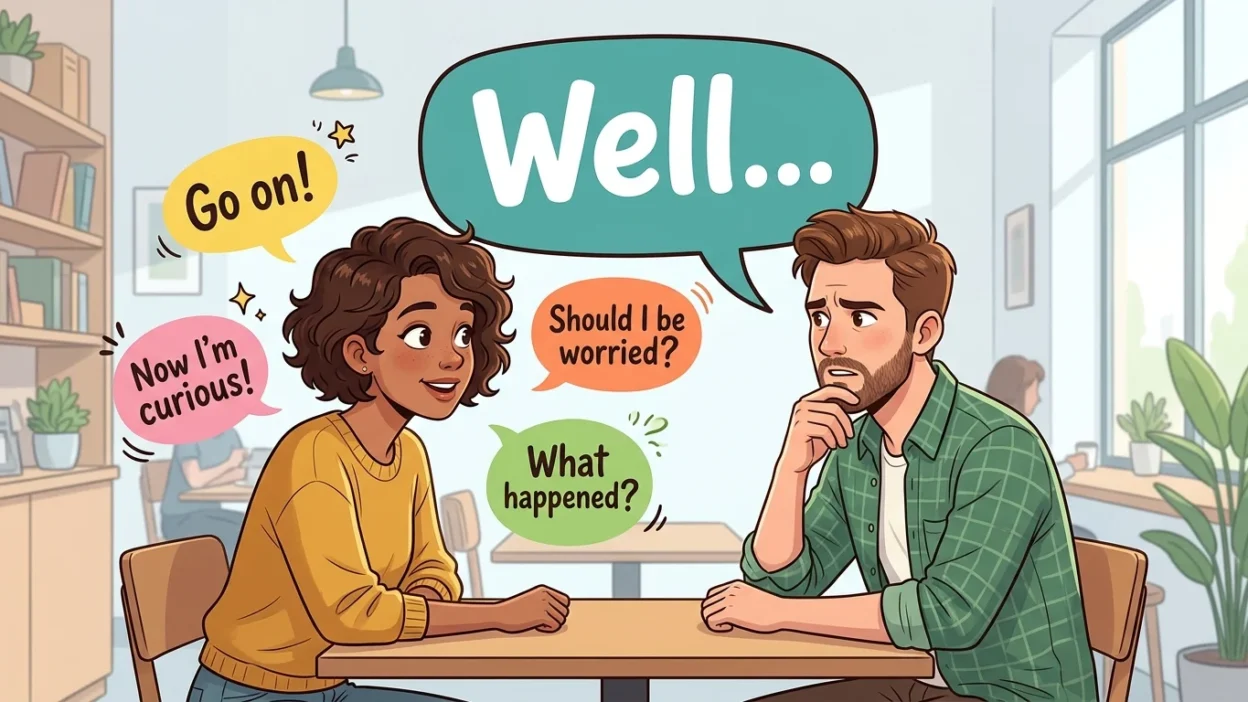
When someone simply says “Well,” it can be surprisingly difficult to know what to say next. Depending on their tone, it might mean they are thinking, hesitating, disagreeing, feeling awkward, or preparing to explain something. A good response can keep the conversation flowing instead of letting an uncomfortable silence take over.
The best replies to “Well” depend on the situation and your relationship with the other person. You might want a funny comeback with a friend, a playful response in a text, a confident answer during an awkward conversation, or a polite reply at work. Here are practical responses for almost every situation, with simple examples you can easily use.
1. “Well, What?”
Best for: When you want them to continue talking.
Alternative: “Well, what is it?”
Examples:
“Okay, well… what? You have my attention.”
“Well, what are you trying to tell me?”
This is a simple response when someone starts with “Well” but does not finish their thought. It encourages them to explain themselves.
2. “Well, Go On.”
Best for: Encouraging someone to continue.
Alternative: “I’m listening.”
Examples:
“Well, go on. I’m waiting.”
“Go on—I promise I won’t interrupt.”
This response sounds confident and interested. It works especially well when someone seems hesitant to say something.
3. “Well, What Happened?”
Best for: Conversations involving a story or unexpected situation.
Alternative: “Okay, tell me what happened.”
Examples:
“Well, what happened after that?”
“You said ‘well’ like something happened. What is it?”
This reply shows curiosity without putting too much pressure on the other person.
4. “That Sounds Serious.”
Best for: When someone says “Well” in a dramatic tone.
Alternative: “Uh-oh, that doesn’t sound good.”
Examples:
“Well, that sounds serious. Should I be worried?”
“You said ‘well’ like you’re about to reveal a secret.”
It adds a little humor while acknowledging their tone.
5. “I’m Listening.”
Best for: Serious or emotional conversations.
Alternative: “You can tell me.”
Examples:
“Well, I’m listening. Take your time.”
“You can tell me what’s on your mind.”
This is a warm response that makes the other person feel comfortable opening up.
6. “Well, That Was Mysterious.”
Best for: Playful texting and casual conversations.
Alternative: “Very mysterious of you.”
Examples:
“Well… that was mysterious.”
“Okay, mysterious stranger, what does that mean?”
This response turns an ordinary “well” into a playful moment.
7. “Don’t Leave Me Hanging.”
Best for: When someone pauses after saying “Well.”
Alternative: “You can’t stop there.”
Examples:
“Well, don’t leave me hanging now.”
“You said ‘well’ and then disappeared. Finish the sentence!”
It is a friendly way to encourage the person to finish what they started.
8. “Well, That Sounds Like a Story.”
Best for: When you suspect something interesting is coming.
Alternative: “Okay, I need to hear this.”
Examples:
“Well, that sounds like a story. Tell me everything.”
“Whenever someone starts with ‘well,’ I know there’s a story coming.”
This response adds humor while inviting more conversation.
9. “Should I Be Nervous?”
Best for: When “well” sounds ominous.
Alternative: “Is something wrong?”
Examples:
“Well, should I be nervous?”
“You said ‘well’ in that tone. Should I prepare myself?”
This playful reply works particularly well with close friends or someone you know well.
10. “Well, Now I’m Curious.”
Best for: Showing genuine interest.
Alternative: “Now you have my attention.”
Examples:
“Well, now I’m curious. What happened?”
“Okay, you have my attention. Tell me.”
It keeps the conversation positive and encourages the other person to continue.
11. “That ‘Well’ Says a Lot.”
Best for: When their tone clearly communicates something.
Alternative: “I can hear the hesitation.”
Examples:
“That ‘well’ says a lot without saying anything.”
“Your ‘well’ just answered my question for you.”
This is a clever response when someone’s hesitation is obvious.
12. “Well, That’s Not Very Convincing.”
Best for: Friendly debates or teasing.
Alternative: “You’re not selling it.”
Examples:
“Well, that’s not very convincing.”
“That ‘well’ definitely did not make your argument stronger.”
Use this when someone is trying to defend an idea but sounds uncertain.
13. “Are You Thinking?”
Best for: When someone seems unsure what to say.
Alternative: “Need a minute?”
Examples:
“Well, are you thinking or avoiding the question?”
“Take your time. I can see the brain loading.”
This can be supportive or humorous depending on your tone.
14. “Well, I’ll Take That as a Maybe.”
Best for: Uncertain answers.
Alternative: “So that’s not a no?”
Examples:
“Well, I’ll take that as a maybe.”
“‘Well’ sounds suspiciously close to ‘maybe’ to me.”
This is especially useful in casual conversations when someone avoids giving a direct answer.
15. “That’s a Very Suspicious ‘Well.’”
Best for: Playful teasing.
Alternative: “That ‘well’ sounds guilty.”
Examples:
“That’s a very suspicious ‘well.’ What did you do?”
“Your ‘well’ just made you sound guilty.”
This funny comeback works when you know the other person is probably hiding something harmless.
16. “Well, Now You Have to Explain.”
Best for: When someone creates curiosity.
Alternative: “Okay, explain yourself.”
Examples:
“Well, now you have to explain.”
“You started with ‘well,’ so now I need the full story.”
It turns their vague opening into an invitation to elaborate.
17. “Is That a Good ‘Well’ or a Bad ‘Well’?”
Best for: Clarifying someone’s mood.
Alternative: “Should I be happy or concerned?”
Examples:
“Is that a good ‘well’ or a bad ‘well’?”
“Help me out—is this a positive well or a disaster well?”
This response is useful when tone makes the meaning unclear.
18. “Well, Here We Go.”
Best for: When you expect a long explanation.
Alternative: “Here comes the story.”
Examples:
“Well, here we go. I knew this conversation was coming.”
“Okay, here we go. Give me the whole story.”
It is playful and works naturally among friends.
19. “You Can’t Just Say ‘Well.’”
Best for: Someone who gives a vague response.
Alternative: “You have to finish that thought.”
Examples:
“You can’t just say ‘well’ and leave me here.”
“Come on, you can’t drop a ‘well’ and disappear.”
This is a fun way to push the conversation forward.
20. “Well, I’m Waiting.”
Best for: A teasing response to a long pause.
Alternative: “Take your time, I guess.”
Examples:
“Well, I’m waiting.”
“I have nowhere to be. Go ahead.”
This response can be playful, but your tone matters. With a friend, it can sound humorous rather than impatient.
21. “Okay… That Was Dramatic.”
Best for: Lighthearted conversations.
Alternative: “You made that sound so serious.”
Examples:
“Okay… that was dramatic.”
“You really gave that ‘well’ some emotional weight.”
This is a funny response when someone says “well” dramatically.
22. “Well, You’ve Got My Attention.”
Best for: Someone about to reveal information.
Alternative: “I’m all ears.”
Examples:
“Well, you’ve got my attention. What happened?”
“Okay, I’m all ears. Continue.”
It is friendly, natural, and keeps the conversation moving.
23. “That Depends on What Comes Next.”
Best for: A mysterious or hesitant “well.”
Alternative: “I’m waiting for the rest.”
Examples:
“That depends on what comes next.”
“Your ‘well’ could lead absolutely anywhere.”
This response works when you want to acknowledge the uncertainty without sounding serious.
24. “Well, Say It.”
Best for: Someone who is clearly hesitant.
Alternative: “Just tell me.”
Examples:
“Well, say it. You clearly want to.”
“Go ahead and say what you’re thinking.”
Use this when you are comfortable with the person and want a direct response.
25. “Are You About to Roast Me?”
Best for: Friends who often tease you.
Alternative: “Is this where you make fun of me?”
Examples:
“Well, are you about to roast me?”
“That ‘well’ sounds like the beginning of a roast.”
This funny comeback is perfect for playful friendships.
26. “Well, That Escalated Quickly.”
Best for: Unexpected or awkward conversations.
Alternative: “That took a turn.”
Examples:
“Well, that escalated quickly.”
“I wasn’t expecting the conversation to go there.”
It is a familiar humorous phrase that can lighten an awkward moment.
27. “I Feel Like There’s a ‘But’ Coming.”
Best for: When someone is about to disagree.
Alternative: “There’s definitely a catch.”
Examples:
“I feel like there’s a ‘but’ coming.”
“That ‘well’ sounds like the beginning of a disagreement.”
This is useful when you can tell someone is preparing to qualify what they just said.
28. “Well, We’re Waiting for the Plot Twist.”
Best for: Funny conversations and texting.
Alternative: “Okay, where’s the plot twist?”
Examples:
“Well, we’re waiting for the plot twist.”
“Go ahead. Give us the unexpected ending.”
This humorous response makes the conversation feel more relaxed and entertaining.
29. “Well, That’s One Way to Put It.”
Best for: When someone gives an interesting or questionable answer.
Alternative: “Interesting choice of words.”
Examples:
“Well, that’s one way to put it.”
“Interesting wording, but I see what you mean.”
This response can be playful, diplomatic, or slightly sarcastic depending on your delivery.
30. “Well, What Can I Say?”
Best for: Confident, humorous conversations.
Alternative: “What can I say? That’s me.”
Examples:
“Well, what can I say? I’m unforgettable.”
“What can I say? I like keeping things interesting.”
This is a confident response when you want to turn “well” into a fun exchange rather than a serious conversation.
FAQs:
1. What is the best reply to “Well”?
A simple response like “Well, what?”, “Go on,” or “I’m listening” works in most situations. Choose based on whether the person sounds serious, hesitant, playful, or sarcastic.
2. What is a funny response to “Well”?
Try “That’s a very suspicious ‘well’”, “You can’t just say ‘well’ and leave me hanging,” or “Well, here we go.” These responses work especially well with friends.
3. How do I respond to “Well” over text?
Keep it short and match their tone. You can say “Well…?”, “Go on 👀,” “Now I’m curious,” or “Should I be worried?”
4. What does it mean when someone only says “Well”?
“Well” can signal hesitation, disagreement, surprise, uncertainty, or that the person is preparing to explain something. The meaning usually depends on the context and tone.
5. What is a good response to a sarcastic “Well”?
You can respond with “And what exactly does that mean?”, “That sounded sarcastic,” or “Okay, I hear the attitude.” If the conversation is friendly, a playful comeback can keep things light.
Conclusion
The best replies to “Well” depend on the mood, context, and relationship you have with the other person. A curious response such as “Go on” keeps the conversation moving, while a funny comeback like “That’s a suspicious ‘well’” can make a casual conversation more entertaining.
The key is to match their energy instead of using the same response every time. If you need a clever comeback, funny text reply, polite response, or confident answer, these examples give you plenty of natural ways to respond and keep the conversation going.

David Owen is a passionate writer and communication enthusiast dedicated to helping readers craft charming, witty, and thoughtful replies. Through ReplyCorner, he shares creative response ideas that make conversations engaging and memorable.