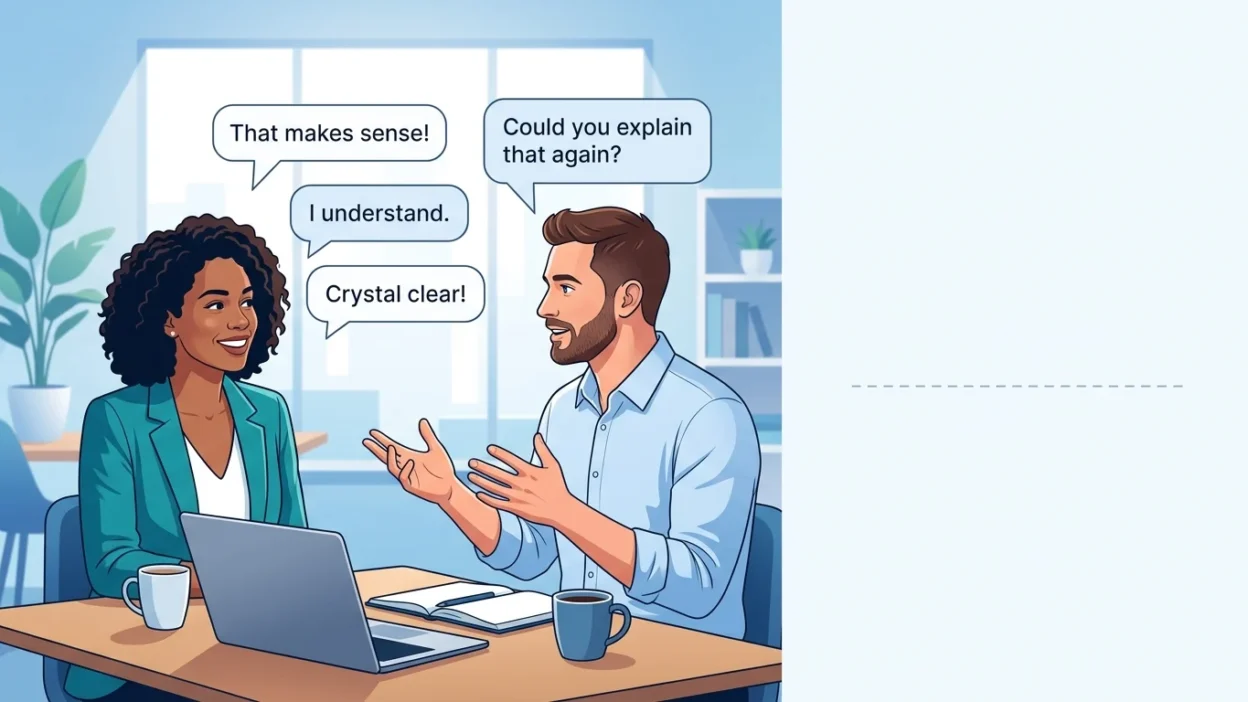
When someone asks, “Does that make sense?”, they’re usually checking If you’ve understood what they explained. It can happen during a work meeting, classroom discussion, casual conversation, or even while receiving instructions. Your response can show that you’re engaged, clarify confusion, or keep the conversation flowing naturally.
Knowing the best responses when someone says “Does That Make Sense?” helps you communicate with confidence. If you want to sound professional, friendly, funny, or honest, this guide shares practical replies for different situations. You’ll also discover polite alternatives, conversation tips, and real-life examples that make everyday communication easier.
1. Yes, That Makes Perfect Sense
Best for: Confirming complete understanding.
Alternative: “I completely understand.”
Examples:
- “Yes, that makes perfect sense. Thanks for explaining.”
- “Absolutely, I follow what you mean.”
A clear and confident response reassures the speaker that their explanation was successful.
2. I Think So, But Could You Explain One Part Again?
Best for: Asking for clarification politely.
Alternative: “Could you go over that one more time?”
Examples:
- “I understand most of it, but could you explain the last part again?”
- “That mostly makes sense, but I have one quick question.”
This shows you’re paying attention instead of pretending to understand.
3. Yes, Thanks for Breaking It Down
Best for: Showing appreciation.
Alternative: “That explanation really helped.”
Examples:
- “Yes, thanks for breaking it down so clearly.”
- “I appreciate the detailed explanation.”
Gratitude encourages positive communication.
4. Crystal Clear
Best for: Casual conversations.
Alternative: “Clear as day.”
Examples:
- “Crystal clear!”
- “Yep, crystal clear now.”
It’s short, friendly, and confident.
5. Absolutely
Best for: Quick professional replies.
Alternative: “Definitely.”
Examples:
- “Absolutely.”
- “Absolutely, I understand.”
Simple responses work well during meetings.
6. I Follow You
Best for: Friendly discussions.
Alternative: “I’m with you.”
Examples:
- “I follow you.”
- “Yep, I’m with you.”
This sounds conversational and natural.
7. That’s Much Clearer Now
Best for: After someone explains twice.
Alternative: “Now I get it.”
Examples:
- “That’s much clearer now.”
- “Now I understand what you meant.”
It acknowledges their effort.
8. I Understand the Main Idea
Best for: Partial understanding.
Alternative: “I get the overall picture.”
Examples:
- “I understand the main idea.”
- “I see where you’re coming from.”
Honest responses build better communication.
9. Could You Give Me an Example?
Best for: Learning complex topics.
Alternative: “Can you show me an example?”
Examples:
- “Could you give me a real-life example?”
- “An example would really help.”
Examples often make confusing ideas easier.
10. That Actually Helps a Lot
Best for: Appreciating helpful explanations.
Alternative: “That clears things up.”
Examples:
- “That actually helps a lot.”
- “Thanks—that clears things up.”
A positive reply encourages continued support.
11. I See What You Mean
Best for: Agreeing politely.
Alternative: “I get your point.”
Examples:
- “I see what you mean.”
- “I understand your perspective.”
Perfect during discussions.
12. I’m Learning, But I’m Getting There
Best for: New employees or students.
Alternative: “I’m still figuring it out.”
Examples:
- “I’m learning, but I’m getting there.”
- “It’s starting to make sense.”
Shows honesty without embarrassment.
13. Thanks, That Cleared Up My Confusion
Best for: After asking questions.
Alternative: “That answered my question.”
Examples:
- “Thanks, that cleared up my confusion.”
- “Now everything fits together.”
Great for professional settings.
14. Mostly, But I Have One More Question
Best for: Continuing the discussion.
Alternative: “Almost.”
Examples:
- “Mostly, but I have one more question.”
- “Almost—I just need clarification.”
Keeps the conversation productive.
15. I’m Good Now
Best for: Informal conversations.
Alternative: “I’ve got it.”
Examples:
- “I’m good now.”
- “I’ve got it, thanks.”
Short and casual.
16. Loud and Clear
Best for: Friendly conversations.
Alternative: “Got it.”
Examples:
- “Loud and clear!”
- “Got it!”
A fun expression that sounds upbeat.
17. I Appreciate You Explaining That
Best for: Respectful communication.
Alternative: “Thanks for taking the time.”
Examples:
- “I appreciate you explaining that.”
- “Thanks for taking the time.”
Acknowledges the speaker’s effort.
18. That Makes Much More Sense Now
Best for: After clarification.
Alternative: “Now it’s clicking.”
Examples:
- “That makes much more sense now.”
- “Everything clicked after that.”
Shows progress in understanding.
19. Not Yet, Could We Slow Down?
Best for: Honest communication.
Alternative: “Could you explain it more slowly?”
Examples:
- “Not yet—could we slow down?”
- “Would you mind explaining step by step?”
Being honest prevents misunderstandings.
20. I Think I Need a Minute to Process It
Best for: Complex explanations.
Alternative: “Let me think about it.”
Examples:
- “I need a minute to process that.”
- “Let me think through it.”
Perfect for technical discussions.
21. That Connects the Dots
Best for: Understanding relationships.
Alternative: “Everything fits now.”
Examples:
- “That connects the dots.”
- “Now it all fits together.”
A natural response after a detailed explanation.
22. Yes, I Can Explain It Back
Best for: Demonstrating understanding.
Alternative: “Let me summarize.”
Examples:
- “Yes, let me explain it back.”
- “Here’s how I understand it.”
Useful in training sessions.
23. That’s Exactly What I Needed
Best for: Appreciating helpful guidance.
Alternative: “Perfect explanation.”
Examples:
- “That’s exactly what I needed.”
- “That answered everything.”
Shows genuine appreciation.
24. I Was Missing That Piece
Best for: Filling knowledge gaps.
Alternative: “That was the missing link.”
Examples:
- “I was missing that piece.”
- “That explains everything.”
A thoughtful response.
25. You’re Explaining It Really Well
Best for: Complimenting the speaker.
Alternative: “You’re making it easy to understand.”
Examples:
- “You’re explaining it really well.”
- “This is easy to follow.”
Positive feedback builds rapport.
26. Almost There
Best for: Partial understanding.
Alternative: “Nearly.”
Examples:
- “Almost there.”
- “I’m close—I just need one more detail.”
A friendly way to ask for more help.
27. Yep, I’m Following Along
Best for: Group conversations.
Alternative: “I’m keeping up.”
Examples:
- “Yep, I’m following along.”
- “Everything makes sense so far.”
Shows active participation.
28. Could You Rephrase That?
Best for: Different learning styles.
Alternative: “Can you say that another way?”
Examples:
- “Could you rephrase that?”
- “Can you explain it differently?”
Sometimes different wording makes all the difference.
29. That Answers My Question
Best for: Ending clarification.
Alternative: “That’s exactly what I wanted to know.”
Examples:
- “That answers my question.”
- “That’s exactly what I needed.”
Great for wrapping up discussions.
30. Yes, Thanks for Checking
Best for: Friendly and professional conversations.
Alternative: “I appreciate you asking.”
Examples:
- “Yes, thanks for checking.”
- “I appreciate you making sure I understood.”
A polite ending that shows respect.
FAQs:
1. What does “Does that make sense?” mean?
It’s a question people ask to check whether you understand what they’ve explained or whether they should explain it differently.
2. Is it okay to say “No” if I don’t understand?
Yes. It’s always better to ask questions than pretend you understand. Honest communication prevents mistakes.
3. What’s the most professional response?
Professional replies include:
- “Yes, that makes perfect sense.”
- “I understand, thank you.”
- “Could you clarify one point for me?”
4. Can I respond with humor?
Yes, if the situation is informal. Responses like “Crystal clear!” or “You lost me at the third sentence—but I’m catching up!” can lighten the mood among friends or coworkers.
5. Why do people ask, “Does that make sense?”
They want to ensure their explanation is clear, encourage questions, and confirm everyone is on the same page.
Conclusion
Finding the best responses when someone says “Does That Make Sense?” helps you become a better communicator in every part of life. If you’re speaking with a teacher, manager, coworker, friend, or family member, responding honestly and respectfully builds trust and prevents misunderstandings. Don’t hesitate to ask for clarification when needed—clear communication is always better than guessing. By using these thoughtful, polite, and conversational replies, you’ll sound more confident and keep every discussion productive.

John Leo is a skilled writer and communication enthusiast who specializes in crafting charming, witty, and thoughtful replies. Through ReplyCorner, he helps readers improve conversations with creative responses for everyday social interactions.