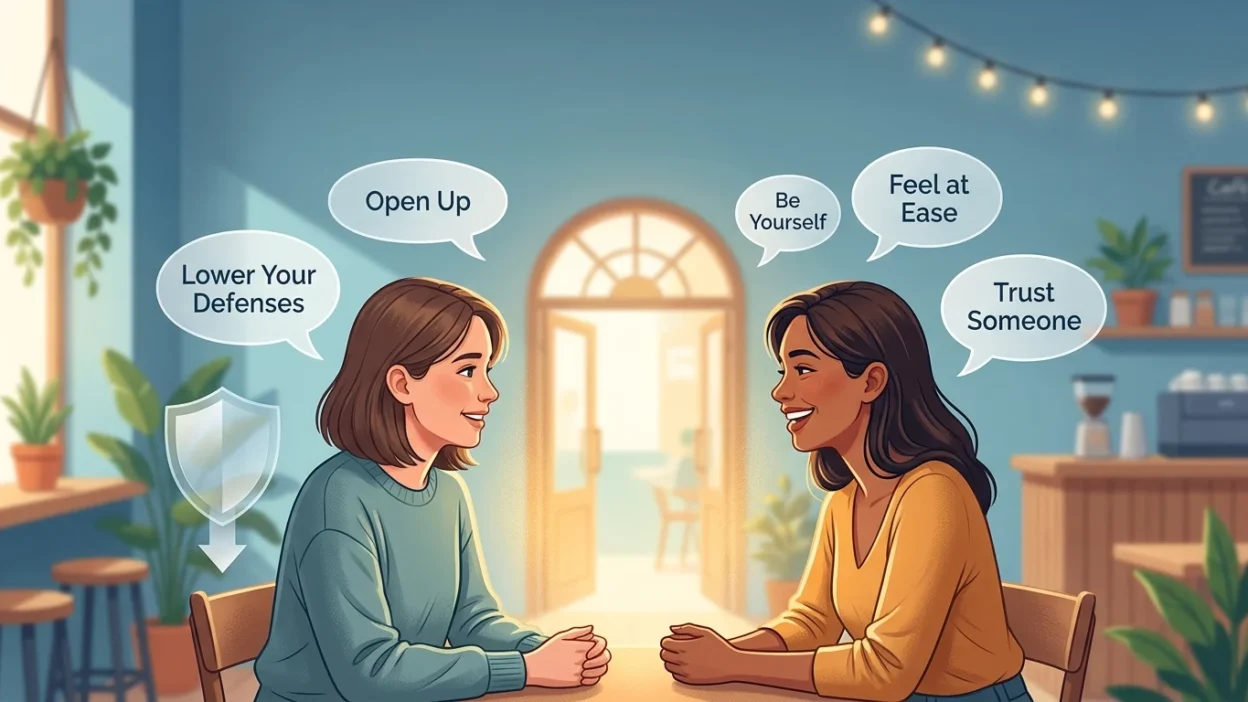
We all hear the phrase “let your guard down” in conversations, movies, workplaces, and relationships. It usually means relaxing, trusting someone, or stopping your defensive behavior. While it’s a common expression, using the same phrase repeatedly can make your writing or conversations feel repetitive.
If you’re looking for other ways to say let your guard down, this guide offers natural alternatives for professional, casual, romantic, and everyday situations. If you’re writing an email, having a heartfelt conversation, or improving your vocabulary, these expressions will help you communicate with more confidence and variety.
1. Open Up
Best for: Personal conversations and friendships
Alternative: Share your feelings
Open up encourages someone to express their emotions honestly.
Examples:
- You can always open up to me.
- It took him months to open up about his worries.
2. Lower Your Defenses
Best for: Emotional discussions
Alternative: Stop being defensive
This phrase highlights becoming less protective emotionally.
Examples:
- Try lowering your defenses during the conversation.
- She finally lowered her defenses around her coworkers.
3. Relax
Best for: Casual conversations
Alternative: Take it easy
A simple way to tell someone they don’t need to worry.
Examples:
- Just relax—everything is under control.
- You can relax around us.
4. Feel Safe
Best for: Building trust
Alternative: Be comfortable
When someone feels secure, they’re more likely to trust others.
Examples:
- I want you to feel safe here.
- He finally felt safe enough to speak honestly.
5. Be Yourself
Best for: Social situations
Alternative: Show your true self
Encourages authenticity without fear of judgment.
Examples:
- Just be yourself around us.
- She felt free to be herself.
6. Trust Someone
Best for: Relationships
Alternative: Have confidence in someone
Trust naturally replaces emotional barriers.
Examples:
- Learn to trust the people who care about you.
- He slowly trusted his new team.
7. Let Go of Fear
Best for: Encouragement
Alternative: Release your worries
Focuses on overcoming anxiety.
Examples:
- Let go of your fear and enjoy the moment.
- She finally let go of her worries.
8. Ease Up
Best for: Informal conversations
Alternative: Loosen up
A relaxed way to encourage someone to stop being tense.
Examples:
- Ease up—you don’t have to impress anyone.
- He eased up after hearing the good news.
9. Loosen Up
Best for: Friendly settings
Alternative: Relax more
Commonly used to encourage comfort.
Examples:
- Loosen up and have fun.
- Everyone loosened up after dinner.
10. Become Comfortable
Best for: New environments
Alternative: Settle in
Shows growing confidence over time.
Examples:
- It takes time to become comfortable.
- She became comfortable with the team quickly.
11. Drop the Walls
Best for: Emotional conversations
Alternative: Remove emotional barriers
A figurative expression for vulnerability.
Examples:
- He finally dropped the walls around his heart.
- She encouraged him to drop the walls.
12. Be Vulnerable
Best for: Deep conversations
Alternative: Show your emotions
Often used in personal growth discussions.
Examples:
- It’s okay to be vulnerable.
- Being vulnerable strengthens relationships.
13. Stop Holding Back
Best for: Honest communication
Alternative: Speak freely
Encourages openness.
Examples:
- Stop holding back your opinion.
- She stopped holding back her feelings.
14. Feel at Ease
Best for: Hospitality
Alternative: Feel comfortable
Perfect for welcoming someone.
Examples:
- Please feel at ease here.
- Guests quickly felt at ease.
15. Let Yourself Relax
Best for: Stress relief
Alternative: Unwind
Useful during stressful situations.
Examples:
- Let yourself relax tonight.
- She finally relaxed after work.
16. Be More Open
Best for: Teamwork
Alternative: Communicate honestly
Encourages better conversations.
Examples:
- Be more open during meetings.
- He became more open with friends.
17. Trust the Process
Best for: Motivation
Alternative: Have patience
Useful when encouraging confidence.
Examples:
- Trust the process.
- Everything will improve if you trust the process.
18. Release Your Tension
Best for: Wellness
Alternative: Calm down
Focuses on physical and emotional relaxation.
Examples:
- Take a deep breath and release your tension.
- Yoga helped her release tension.
19. Stop Being So Cautious
Best for: Friendly advice
Alternative: Take a chance
Encourages calculated confidence.
Examples:
- Stop being so cautious.
- Sometimes you need to take a chance.
20. Feel Free
Best for: Invitations
Alternative: Don’t hesitate
Creates a welcoming atmosphere.
Examples:
- Feel free to ask questions.
- Feel free to join us.
21. Remove Your Emotional Armor
Best for: Self-improvement
Alternative: Be emotionally available
Describes emotional openness.
Examples:
- Remove your emotional armor.
- He became emotionally available.
22. Give Someone a Chance
Best for: New relationships
Alternative: Trust again
Encourages openness toward others.
Examples:
- Give him a chance.
- She gave friendship another chance.
23. Take Down Your Walls
Best for: Romantic conversations
Alternative: Open your heart
Common in emotional discussions.
Examples:
- Take down your walls.
- She finally opened her heart.
24. Unwind
Best for: Relaxation
Alternative: Recharge
Focuses on mental rest.
Examples:
- It’s time to unwind.
- They unwound by the beach.
25. Breathe Easy
Best for: Comforting someone
Alternative: Stop worrying
A reassuring expression.
Examples:
- You can breathe easy now.
- Everyone breathed easy after hearing the news.
26. Be Less Reserved
Best for: Social confidence
Alternative: Be outgoing
Encourages openness.
Examples:
- Try being less reserved.
- He became less reserved over time.
27. Show Your True Colors
Best for: Authenticity
Alternative: Reveal your personality
Highlights honesty.
Examples:
- Show your true colors.
- She wasn’t afraid to show her personality.
28. Take a Deep Breath
Best for: Stressful moments
Alternative: Calm yourself
Simple advice before opening up.
Examples:
- Take a deep breath first.
- Everyone paused to breathe deeply.
29. Be Honest
Best for: Difficult conversations
Alternative: Tell the truth
Honesty naturally lowers emotional barriers.
Examples:
- Just be honest with me.
- He was honest about his feelings.
30. Stop Expecting the Worst
Best for: Positive thinking
Alternative: Think positively
Helps reduce unnecessary fear.
Examples:
- Stop expecting the worst.
- She learned to think more positively.
Conclusion
Finding other ways to say let your guard down makes your conversations, writing, and communication more engaging and natural. If you choose open up, lower your defenses, feel at ease, or be vulnerable, each expression fits different situations while helping you express trust, comfort, and emotional openness. Practice these alternatives to expand your vocabulary and communicate with greater confidence and authenticity.
FAQs:
1. What does “let your guard down” mean?
It means becoming less defensive, trusting someone, or relaxing emotionally or mentally.
2. What’s a professional way to say “let your guard down”?
Professional alternatives include be more open, feel comfortable, communicate honestly, and lower your defenses.
3. What is another word for emotional openness?
Words like vulnerability, trust, honesty, authenticity, and openness describe emotional openness.
4. Is “let your guard down” positive?
Usually, yes. It often suggests trust, comfort, and building stronger relationships, although it can sometimes imply becoming less cautious.
5. Can I use these alternatives in writing?
Absolutely. These expressions work well in emails, blogs, conversations, speeches, fiction, and professional communication.