
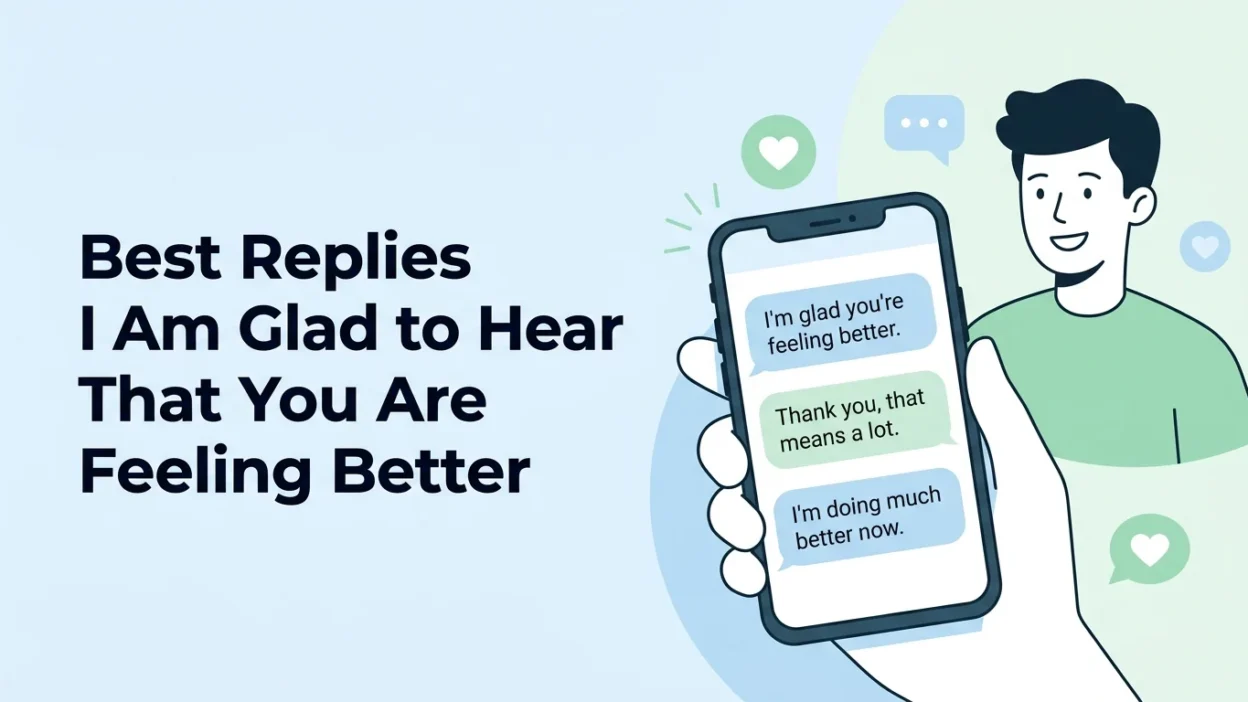
Hearing someone say, “I am glad to hear that you are feeling better,” can instantly make you feel supported and cared for. If you’re recovering from an illness, dealing with stress, or simply having a better day, replying with the right words helps strengthen your relationship and shows appreciation for their kindness.
In this guide, you’ll discover the best replies to “I am glad to hear that you are feeling better”, including polite, heartfelt, friendly, professional, and even lighthearted responses. These replies are perfect for texts, conversations, emails, or social media messages while sounding natural, genuine, and warm.
1. Thank You, I Really Appreciate Your Kindness
Best for: Expressing sincere gratitude.
Alternative: “Thanks, that means a lot.”
Examples:
- Thank you, I really appreciate your kindness and support.
- Thanks so much. Your words truly mean a lot to me.
A simple thank-you is often the most heartfelt response.
2. I’m Feeling Much Better Now
Best for: Updating someone on your recovery.
Alternative: “I’m definitely improving.”
Examples:
- I’m feeling much better now. Thanks for checking in.
- Thankfully, I’m doing much better today.
This reassures the other person that you’re recovering well.
3. Thanks for Thinking of Me
Best for: Friends, family, and coworkers.
Alternative: “I appreciate you checking on me.”
Examples:
- Thanks for thinking of me—it really helped.
- I truly appreciate you keeping me in your thoughts.
This reply highlights their care and concern.
4. Your Support Means a Lot
Best for: Emotional conversations.
Alternative: “I couldn’t have done it without your support.”
Examples:
- Your support means more than you know.
- I’m grateful for all your encouragement.
This creates a deeper emotional connection.
5. I’m Lucky to Have People Like You
Best for: Close relationships.
Alternative: “I’m grateful to have you.”
Examples:
- I’m lucky to have someone as thoughtful as you.
- Your kindness has made this easier.
Perfect for showing appreciation.
6. Thank You for Checking In
Best for: Casual conversations.
Alternative: “Thanks for reaching out.”
Examples:
- Thank you for checking in on me.
- I appreciate you taking the time to ask.
It acknowledges their effort.
7. I’m Getting Stronger Every Day
Best for: Recovery updates.
Alternative: “Things are improving.”
Examples:
- I’m getting stronger every day.
- Every day feels a little better.
Positive and encouraging.
8. I Appreciate Your Concern
Best for: Professional or formal conversations.
Alternative: “Thank you for your concern.”
Examples:
- I sincerely appreciate your concern.
- Thank you for your thoughtful message.
Professional and respectful.
9. That Means So Much to Me
Best for: Heartfelt moments.
Alternative: “Your words really touched me.”
Examples:
- That means so much to me.
- Hearing that made my day.
Shows emotional appreciation.
10. I’m Glad Things Are Looking Up
Best for: Positive conversations.
Alternative: “Thankfully, things are improving.”
Examples:
- Yes, things are finally looking up.
- Thankfully, every day gets a little easier.
Optimistic and hopeful.
11. Thanks, I’m Taking It One Day at a Time
Best for: Long recoveries.
Alternative: “Slowly but surely.”
Examples:
- Thanks. I’m taking it one day at a time.
- Recovery is slow, but I’m making progress.
Keeps expectations realistic.
12. Your Encouragement Helped Me
Best for: Friends and family.
Alternative: “Your support made a difference.”
Examples:
- Your encouragement helped me stay positive.
- I couldn’t have done it without everyone’s support.
Makes people feel valued.
13. I’m Happy to Be Back
Best for: Returning to work or school.
Alternative: “It’s good to be back.”
Examples:
- I’m happy to be back and feeling better.
- It feels great to return to normal.
Positive and enthusiastic.
14. Thank You for Being There
Best for: Emotional support.
Alternative: “I appreciate everything.”
Examples:
- Thank you for being there when I needed it.
- Your support meant everything.
A warm, meaningful response.
15. I’m Grateful for Your Thoughtfulness
Best for: Formal appreciation.
Alternative: “Thank you for your kindness.”
Examples:
- I’m grateful for your thoughtfulness.
- Thank you for your caring words.
Suitable for professional settings.
16. I’m Feeling More Like Myself Again
Best for: Personal recovery.
Alternative: “I’m getting back to normal.”
Examples:
- I’m finally feeling more like myself again.
- It’s nice to have my energy back.
Comforting and optimistic.
17. Thanks, That Brightened My Day
Best for: Friendly chats.
Alternative: “That made me smile.”
Examples:
- Thanks, that really brightened my day.
- Your message put a smile on my face.
Adds warmth to the conversation.
18. I’m Doing My Best
Best for: Honest updates.
Alternative: “I’m making progress.”
Examples:
- I’m doing my best every day.
- Things aren’t perfect, but they’re improving.
Honest without sounding negative.
19. I’m Feeling Much More Positive
Best for: Mental and emotional recovery.
Alternative: “I’m in a better place now.”
Examples:
- I’m feeling much more positive lately.
- Things are finally heading in the right direction.
Shows emotional growth.
20. I Couldn’t Ask for Better Friends
Best for: Close friendships.
Alternative: “You all have been amazing.”
Examples:
- I couldn’t ask for better friends.
- You’ve all been incredibly supportive.
Strengthens relationships.
21. Thank You for Your Patience
Best for: Workplace conversations.
Alternative: “I appreciate your understanding.”
Examples:
- Thank you for your patience during my recovery.
- I appreciate everyone’s understanding.
Professional and courteous.
22. I’m Glad the Hard Part Is Over
Best for: Recovery milestones.
Alternative: “The worst is behind me.”
Examples:
- I’m glad the hard part is over.
- Thankfully, I’m moving forward now.
Optimistic and reassuring.
23. I’m Looking Forward to Better Days
Best for: Hopeful conversations.
Alternative: “I’m excited for what’s ahead.”
Examples:
- I’m looking forward to brighter days.
- Better days are definitely ahead.
Encouraging and uplifting.
24. Your Message Made Me Smile
Best for: Casual conversations.
Alternative: “That was so thoughtful.”
Examples:
- Your message made me smile today.
- Thanks for making my day better.
Simple and genuine.
25. I’m Feeling Blessed
Best for: Personal or spiritual conversations.
Alternative: “I’m thankful.”
Examples:
- I’m feeling blessed to be doing better.
- I’m thankful for everyone’s support.
Warm and appreciative.
26. Recovery Has Been Worth It
Best for: Reflecting on progress.
Alternative: “I’m glad I kept going.”
Examples:
- Recovery has been worth every step.
- I’m grateful to finally feel better.
Reflective and encouraging.
27. I’m Ready to Get Back to Normal
Best for: Everyday conversations.
Alternative: “I’m excited to move forward.”
Examples:
- I’m ready to get back to my routine.
- It feels good to return to normal life.
Shows enthusiasm.
28. Thanks for Never Giving Up on Me
Best for: Emotional support.
Alternative: “You stuck by me.”
Examples:
- Thanks for never giving up on me.
- Your support kept me going.
Very heartfelt.
29. I’m Happy to Be Smiling Again
Best for: Positive recovery.
Alternative: “Life feels brighter now.”
Examples:
- I’m happy to be smiling again.
- It’s wonderful to enjoy life again.
Celebrates recovery.
30. Thank You—I’m Truly Grateful
Best for: Almost any situation.
Alternative: “I sincerely appreciate it.”
Examples:
- Thank you—I’m truly grateful for your kindness.
- I appreciate your thoughtful words so much.
A timeless response that fits nearly every conversation.
Conclusion
Knowing the best replies to “I am glad to hear that you are feeling better” helps you respond with sincerity, gratitude, and warmth. If you’re talking to a close friend, family member, coworker, or acquaintance, choosing the right words can make your appreciation feel genuine and strengthen your connection. The next time someone expresses happiness about your recovery, use one of these thoughtful responses to let them know their kindness truly matters.
FAQs:
1. What’s the best reply to “I am glad to hear that you are feeling better”?
A simple response like “Thank you, I really appreciate your kindness” or “Thanks, I’m feeling much better now” is sincere and natural.
2. How do I respond professionally?
You can say, “Thank you for your concern. I’m doing much better now and appreciate your support.”
3. Can I keep my reply short?
Yes. Replies like “Thanks so much!”, “I appreciate it!”, or “That means a lot.” work perfectly.
4. How do I make my reply more heartfelt?
Mention their support by saying, “Your encouragement really helped me. Thank you for being there.”
5. Is it okay to add an update?
Absolutely. Sharing a brief update like “I’m feeling stronger every day” makes the conversation more personal and reassuring.

David Owen is a passionate writer and communication enthusiast dedicated to helping readers craft charming, witty, and thoughtful replies. Through ReplyCorner, he shares creative response ideas that make conversations engaging and memorable.