
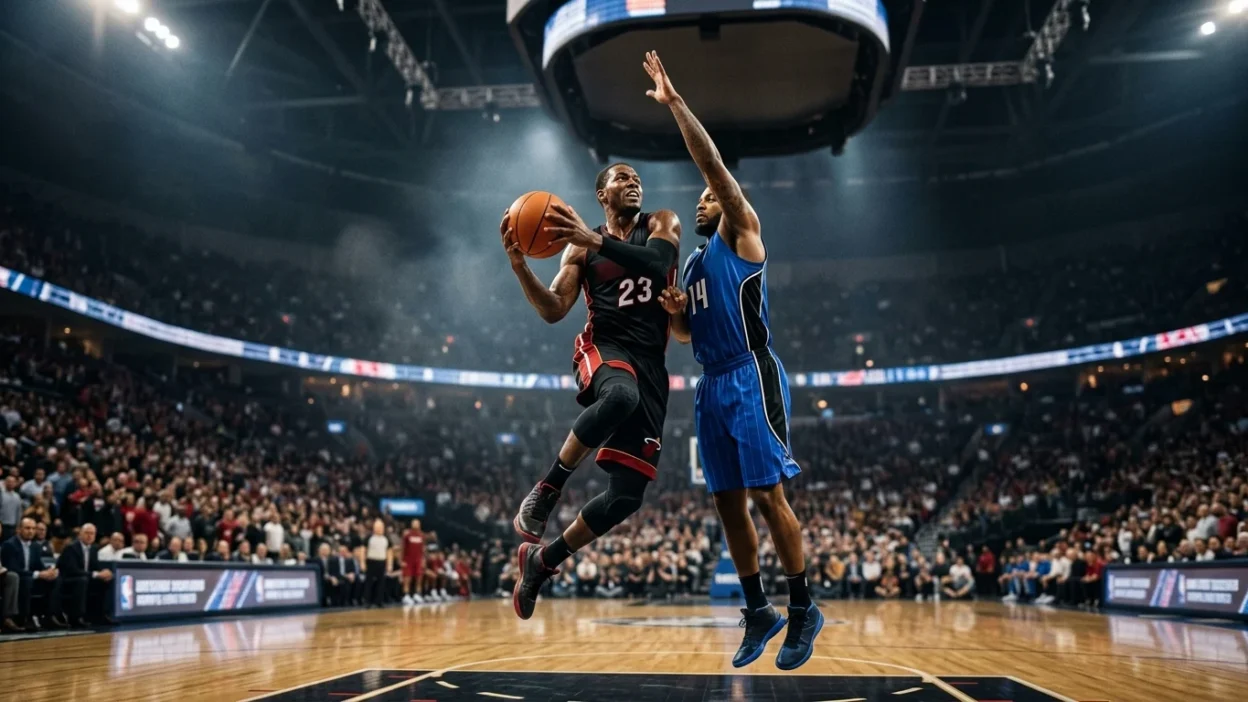
The Miami Heat vs Orlando Magic match player stats help basketball fans understand how individual players influence the game, which team performs better, and what decides the final result. Key statistics include points, rebounds, assists, steals, blocks, shooting percentages, turnovers, and minutes played. These numbers provide a clearer picture of each team’s performance than the final score alone.
If you follow the Miami Heat or the Orlando Magic, comparing player statistics can reveal which players lead the offense, control the rebounds, create scoring opportunities, and make important defensive plays. Fans can also use these numbers to compare starting lineups, bench contributions, and individual performances across different matchups.
Because Miami and Orlando can meet multiple times in the NBA regular season and playoffs, the exact game date matters when checking a box score. Player statistics, injuries, starting lineups, and results can vary from one meeting to another. The most reliable analysis identifies the specific game before comparing individual performances.
Quick Answer
Miami Heat vs Orlando Magic match player stats include points, rebounds, assists, steals, blocks, field-goal percentage, three-point shooting, free throws, and turnovers. To identify the top performers accurately, check the official box score for the specific game date. Without that date, a single matchup’s statistics cannot be confirmed reliably.
Miami Heat vs Orlando Magic: Latest Match Result
The latest verified preseason meeting took place on October 16, 2026, at Kia Center in Orlando. The Magic defeated the Heat 136–115, winning by 21 points.
NBA.com
+1
Miami Heat
115
Final
Oct. 16, 2026
Preseason
Orlando Magic
136
Venue: Kia Center, Orlando, Florida
Official box score: NBA.com player statistics
Key Player Performances
The box score highlights several notable individual performances from this matchup.
SI
+1
| Player | Team | Points | Rebounds | Assists |
|---|---|---|---|---|
| Paolo Banchero | Orlando | 24 | 7 | 4 |
| Desmond Bane | Orlando | 23 | 2 | 1 |
| Ryan Conwell | Miami | 21 | 1 | 7 |
| Andrew Wiggins | Miami | 13 | 2 | 1 |
| Nikola Jović | Miami | 12 | 6 | 1 |
| Bobby Portis | Miami | 12 | 5 | 1 |
These figures are for the October 16 preseason game, not season averages. Player totals and minutes can differ substantially between preseason and regular-season games.
SI
+1
Why Do Fans Compare Miami Heat and Orlando Magic Player Stats?
Fans compare these teams to understand why one wins and which players make the biggest impact. A final score shows the outcome, but individual statistics explain how the game developed.
The most useful comparisons include:
- Scoring: Which players score the most points?
- Rebounding: Which team collects more missed shots?
- Playmaking: Which players create scoring opportunities?
- Shooting efficiency: Who converts the highest percentage of shots?
- Defense: Who contributes steals, blocks, and defensive rebounds?
- Bench production: Which team’s substitutes provide more support?
For example, Ryan Conwell recorded 21 points and seven assists for Miami, while Paolo Banchero scored 24 points and grabbed seven rebounds for Orlando in the October 16 matchup. These performances demonstrate different ways players can contribute.
SI
+1
Miami Heat Player Stats Explained
The Miami Heat’s player statistics help show how the team distributes scoring, creates shots, and competes for rebounds.
Points and Shooting
Points measure a player’s scoring contribution. Field-goal percentage shows how often a player makes two-point and three-point shots combined, while three-point percentage measures success from beyond the arc.
In the October 16 game, Ryan Conwell led Miami’s listed scorers with 21 points. Andrew Wiggins added 13 points, and Nikola Jović contributed 12 points.
SI
+1
Rebounds and Assists
Rebounds indicate how often players recover the ball after a missed shot. Assists record passes that directly lead to made baskets.
Conwell’s seven assists were particularly notable because they showed his contribution to Miami’s offense beyond scoring.
Defense and Turnovers
Steals, blocks, defensive rebounds, and turnovers provide additional context. A player might not lead the team in points but can still influence the result through defensive stops or smart passing.
Orlando Magic Player Stats Explained
The Orlando Magic’s box score helps identify their leading scorers, rebounders, and playmakers.
Scoring Leaders
Paolo Banchero scored 24 points, while Desmond Bane added 23 points in the October 16 preseason victory. Both made important scoring contributions as Orlando finished with 136 points.
SI
+1
Rebounding and Playmaking
Banchero recorded seven rebounds and four assists. These figures show that his contribution extended beyond scoring, helping Orlando with ball movement and possession recovery.
Team Contributions
Basketball games are rarely decided by one player alone. Shooting, defensive coverage, transition offense, and contributions from the bench all affect the final score.
Orlando’s 136-point total reflected a strong overall offensive performance in this particular matchup.
NBA.com
+1
Miami Heat vs Orlando Magic Team Comparison
The team statistics below provide additional context for the October 16, 2026, preseason game.
| Team statistic | Miami Heat | Orlando Magic |
|---|---|---|
| Final score | 115 | 136 |
| Rebounds | 42 | 48 |
| Assists | 30 | 30 |
| Steals | 7 | 9 |
| Blocks | 3 | 3 |
| Three-pointers made/attempted | 14/50 | 15/41 |
| Free throws made/attempted | 12/17 | 27/38 |
Source: published game box-score data.
NBA.com
+1
What Do These Numbers Tell Us?
- Scoring: Orlando scored 21 more points than Miami.
- Rebounding: Orlando collected six more rebounds.
- Playmaking: Both teams recorded 30 assists.
- Three-point shooting: Miami made 14 three-pointers but attempted nine more than Orlando.
- Free throws: Orlando made 27 free throws, compared with Miami’s 12.
These figures help explain the result, although team totals alone do not establish every player’s individual impact.
When Should You Check Each Statistic?
Different statistics answer different basketball questions.
| If you want to know… | Check… |
|---|---|
| Who was the leading scorer? | Points |
| Who controlled the boards? | Total rebounds |
| Who created scoring opportunities? | Assists |
| Who shot most efficiently? | Field-goal percentage |
| Who defended the rim? | Blocks |
| Who disrupted opposing possessions? | Steals |
| Who protected possession of the ball? | Turnovers |
| Who played the most? | Minutes |
For a complete player evaluation, combine several statistics rather than relying on a single number.
10 Examples of How to Read Match Player Stats
- 24 points: Banchero scored 24 points against Miami.
- 23 points: Bane contributed 23 points for Orlando.
- 21 points: Conwell led Miami’s scorers with 21 points.
- 7 rebounds: Banchero collected seven rebounds.
- 7 assists: Conwell recorded seven assists.
- 30 team assists: Both teams recorded 30 assists.
- 48 rebounds: Orlando collected 48 rebounds.
- 42 rebounds: Miami collected 42 rebounds.
- 14 three-pointers: Miami made 14 shots from beyond the arc.
- 136 team points: Orlando finished with 136 points.
All ten examples refer to the October 16, 2026, preseason matchup.
SI
+2
Common Mistakes When Reading NBA Box Scores
Avoid these common errors when analyzing Miami Heat vs Orlando Magic match player stats.
- Confusing points with shooting attempts: A player can attempt many shots without scoring many points.
- Mixing up rebounds and assists: Rebounds recover missed shots; assists help teammates score.
- Ignoring minutes played: A player who scores 15 points in 15 minutes has a different scoring rate from someone who needs 35 minutes.
- Treating preseason results as regular-season results: Preseason games have a different context and often different playing-time patterns.
- Using season averages instead of game statistics: A player’s average does not equal their output in one specific game.
- Comparing different match dates: Always verify the date before comparing player performances.
Memory Trick: P-R-A-S-T
Use this simple memory trick to remember the main basketball statistics:
- P — Points: Scoring contribution.
- R — Rebounds: Recovering missed shots.
- A — Assists: Helping teammates score.
- S — Steals: Taking the ball from an opponent.
- T — Turnovers: Losing possession of the ball.
Add blocks and shooting percentages when you need a more complete picture of a player’s performance.
American vs British English: Basketball Terminology
Basketball statistics are largely consistent across American and British English, but some sports terms and spellings differ.
| American English | British English or alternative |
|---|---|
| Defense | Defence |
| Offense | Offence |
| Center | Centre |
| Points | Points |
| Rebounds | Rebounds |
| Assists | Assists |
NBA box scores typically use American spellings such as defense, offense, and center. Readers in the UK may recognize the British spellings, but the underlying basketball statistics mean the same thing.
Similar Statistics Worth Comparing
Besides points, rebounds, and assists, these metrics help provide a more complete understanding of an NBA game.
- Field-goal percentage (FG%): The percentage of field-goal attempts a player makes.
- Three-point percentage (3P%): The percentage of three-point attempts that go in.
- Free-throw percentage (FT%): The percentage of free throws made.
- Plus-minus (+/-): The team’s scoring margin while a player is on the court.
- Player efficiency rating (PER): A composite statistic intended to summarize several aspects of individual performance.
- Double-double: A game in which a player reaches at least 10 in two statistical categories, such as points and rebounds.
These statistics complement the traditional box score, but none should be interpreted without considering playing time, role, and game context.
Final Verdict
The Miami Heat vs Orlando Magic player statistics from October 16, 2026, show a 136–115 Orlando victory. Paolo Banchero and Desmond Bane led Orlando’s scoring, while Ryan Conwell delivered Miami’s highest individual point total among the players listed above.
SI
+1
The team comparison also highlights Orlando’s rebounding advantage and higher free-throw total. For the most accurate assessment, review the complete box score, including shooting percentages, minutes, defensive statistics, and turnovers.
FAQs:
1. Who won the latest Miami Heat vs Orlando Magic game?
The Orlando Magic defeated the Miami Heat 136–115 in their preseason game on October 16, 2026, at Kia Center in Orlando.
NBA.com
+1
2. Who was the leading scorer for the Miami Heat?
Ryan Conwell led Miami’s scorers in the October 16 preseason matchup with 21 points.
SI
+1
3. How many points did Paolo Banchero score against Miami?
Paolo Banchero scored 24 points, collected seven rebounds, and recorded four assists in the October 16, 2026, preseason game.
CourtFrame
4. How many points did Desmond Bane score?
Desmond Bane scored 23 points for Orlando in the October 16 matchup.
CourtFrame
5. Where can I find the official Miami Heat vs Orlando Magic box score?
Visit the official NBA.com box score for player statistics from the October 16, 2026, preseason game.
6. Which team had more rebounds?
Orlando recorded 48 rebounds, while Miami recorded 42 in the October 16 game.
CourtFrame
7. Are these regular-season player stats?
No. The statistics in this article refer to the October 16, 2026, preseason game. Regular-season and playoff statistics should be checked separately.
Remember This
- Orlando won the October 16, 2026, preseason matchup, 136–115.
- Paolo Banchero scored 24 points for Orlando.
- Ryan Conwell scored 21 points for Miami.
- Orlando collected more rebounds, while both teams recorded 30 assists.
- Always check the game date and competition before using player statistics.
Conclusion
Miami Heat vs Orlando Magic match player stats offer a useful way to understand individual performances and team strengths. Points reveal scoring contributions, rebounds measure possession recovery, and assists show how players create opportunities for teammates.
For accurate comparisons, use the official NBA box score for the specific matchup you want to analyze. Checking the date, competition, shooting percentages, minutes, and defensive statistics will help you build a more complete picture of how Miami and Orlando performed.

John Leo is a skilled writer and communication enthusiast who specializes in crafting charming, witty, and thoughtful replies. Through ReplyCorner, he helps readers improve conversations with creative responses for everyday social interactions.