People often search for Best Replies to I’m Feeling Better Now to find a simple, warm, and natural way to answer with kindness and care after someone shares good news.
When someone says they feel better or are feeling better, your reply should reflect empathy, genuine care, compassion, and kindness instead of sounding rehearsed. A thoughtful response, whether it is a positive reply, friendly reply, genuine response, natural response, warm response, or thoughtful reply, helps a friend, family member, or colleague feel valued during their recovery, recovering, healing journey, and progress.
Showing gratitude, hope, joy, relief, happiness, care, comfort, and appreciation can encourage someone who was unwell, sick, facing an illness or sickness, to stay healthy, continue healing, become healed, and enjoy better health, wellness, and wellbeing.
A supportive message works best when it focuses on expressing support, emotional support, encouragement, reassurance, caring words, and comforting words in a meaningful way. You can acknowledge or acknowledging their journey, express your happiness, or simply check in after a tough week.
If your conversation happens through texts, text messages, chats, messaging, communication, in-person conversations, or social media, a sincere message keeps the conversation flowing and builds stronger relationship, relationships, connection, bonding, and emotional connection. In my experience, these small gestures are remembered long after the conversation ends because genuine support and positivity leave a lasting impact.
1. Express Genuine Happiness
Best for: Friends, family, coworkers
Alternative: “That’s wonderful to hear.”
Examples:
- I’m so glad you’re feeling better now.
- That’s great news! I was worried about you.
A sincere response lets the other person know their recovery matters to you.
2. Celebrate Their Recovery
Best for: Close friends
Alternative: “That’s worth celebrating.”
Examples:
- Finally! I’ve been waiting to hear that.
- That’s the update I was hoping for.
Celebrating even small improvements helps spread positivity.
3. Encourage Them to Keep Resting
Best for: Someone recovering from illness
Alternative: “Keep taking care of yourself.”
Examples:
- I’m happy you’re better—don’t rush things.
- Great! Just remember to keep getting enough rest.
Feeling better doesn’t always mean fully recovered.
4. Show Relief
Best for: Loved ones
Alternative: “What a relief.”
Examples:
- That makes me feel so much better too.
- I’m relieved to hear you’re doing well.
Sharing your relief shows genuine concern.
5. Add a Touch of Humor
Best for: Friends with a playful relationship
Alternative: “Welcome back!”
Examples:
- Good! The world needs your chaos again.
- Glad you’re back—I was running out of jokes to send.
A little humor can make the conversation lighter.
6. Compliment Their Strength
Best for: Someone who overcame a difficult time
Alternative: “You’re stronger than you think.”
Examples:
- You handled that really well.
- I knew you’d bounce back.
Encouragement boosts their confidence.
7. Ask How They’re Doing
Best for: Continuing the conversation
Alternative: “How are you feeling today?”
Examples:
- That’s awesome. How are you feeling now?
- What’s been helping you feel better?
Follow-up questions show continued interest.
8. Offer Continued Support
Best for: Close relationships
Alternative: “I’m here if you need anything.”
Examples:
- Let me know if you need anything.
- I’m always just a message away.
Support shouldn’t stop once they’re improving.
9. Keep It Simple
Best for: Casual conversations
Alternative: “That’s great.”
Examples:
- Glad to hear it!
- That’s awesome.
Short replies work perfectly in everyday chats.
10. Share Your Excitement
Best for: Friends and family
Alternative: “Fantastic news!”
Examples:
- That absolutely made my day.
- Best news I’ve heard today.
Enthusiasm makes your response memorable.
11. Encourage Healthy Habits
Best for: Recovering from sickness
Alternative: “Keep taking care of yourself.”
Examples:
- Stay hydrated and keep resting.
- Don’t forget to take it easy.
Gentle reminders show care without sounding controlling.
12. Say You’re Proud
Best for: Emotional support
Alternative: “You did great.”
Examples:
- I’m proud of how you’ve handled everything.
- You stayed strong through it all.
Recognition feels encouraging.
13. Thank Them for the Update
Best for: Friends and coworkers
Alternative: “Thanks for letting me know.”
Examples:
- Thanks for the update—I appreciate it.
- I’m glad you told me.
Acknowledging their message feels respectful.
14. Wish Them Continued Recovery
Best for: Ongoing healing
Alternative: “Hope you keep improving.”
Examples:
- Hope each day gets even better.
- Wishing you a full recovery.
Recovery often happens gradually.
15. Be Cheerful
Best for: Casual conversations
Alternative: “Yay!”
Examples:
- That’s amazing news!
- Woohoo! Glad you’re feeling good.
Positive energy is contagious.
16. Mention You Missed Them
Best for: Friends and partners
Alternative: “It’s good to have you back.”
Examples:
- We all missed you.
- Things weren’t the same without you.
This makes people feel valued.
17. Encourage Fun Plans
Best for: Friends
Alternative: “Let’s do something soon.”
Examples:
- Now we can finally hang out.
- Time to make up for lost time.
Looking ahead creates excitement.
18. Respond with Gratitude
Best for: Family members
Alternative: “I’m thankful.”
Examples:
- I’m thankful you’re okay.
- That’s such comforting news.
Gratitude deepens emotional connections.
19. Keep It Warm
Best for: Text messages
Alternative: “Take care.”
Examples:
- So happy to hear that. ❤️
- That’s wonderful—keep smiling.
Warm replies feel personal.
20. Recognize Their Progress
Best for: Mental or physical recovery
Alternative: “You’re making progress.”
Examples:
- Every step forward counts.
- You’re doing better every day.
Small victories deserve recognition.
21. Offer Encouragement
Best for: Difficult recoveries
Alternative: “Keep going.”
Examples:
- Keep up the great progress.
- You’re heading in the right direction.
Motivation helps maintain momentum.
22. Reply with Optimism
Best for: Everyday conversations
Alternative: “Things are looking up.”
Examples:
- Hopefully it’s only upward from here.
- Better days are definitely ahead.
Optimistic replies inspire hope.
23. Respond as a Coworker
Best for: Professional settings
Alternative: “Glad you’re doing better.”
Examples:
- Glad to hear you’re feeling better.
- Looking forward to having you back.
Professional yet caring responses work well.
24. Reply to Your Partner
Best for: Romantic relationships
Alternative: “I was worried about you.”
Examples:
- Hearing that makes my heart happy.
- I’ve been thinking about you all day.
Affection strengthens emotional bonds.
25. Respond to a Friend
Best for: Close friendships
Alternative: “That’s awesome.”
Examples:
- You’re back in action!
- I knew you’d bounce back quickly.
Friendly enthusiasm feels natural.
26. Respond to Family
Best for: Parents, siblings, relatives
Alternative: “Take care.”
Examples:
- That’s the news I’ve been waiting for.
- Keep getting stronger every day.
Family conversations often benefit from reassurance.
27. Encourage Self-Care
Best for: Wellness conversations
Alternative: “Listen to your body.”
Examples:
- Don’t overdo it yet.
- Keep putting yourself first.
Recovery is easier with patience.
28. Inspire Confidence
Best for: Emotional support
Alternative: “You’ve got this.”
Examples:
- You’ve come a long way.
- I believe in you.
Confidence can speed emotional recovery.
29. Show Kindness
Best for: Any relationship
Alternative: “Take care of yourself.”
Examples:
- I’m genuinely happy for you.
- Wishing you continued happiness and health.
Kind words leave lasting impressions.
30. End on a Positive Note
Best for: Closing the conversation
Alternative: “Have a great day.”
Examples:
- Keep smiling and enjoy your day.
- Here’s to feeling even better tomorrow.
Ending positively leaves the conversation on a cheerful note.
FAQs:
1. What is the best reply to “I’m feeling better now”?
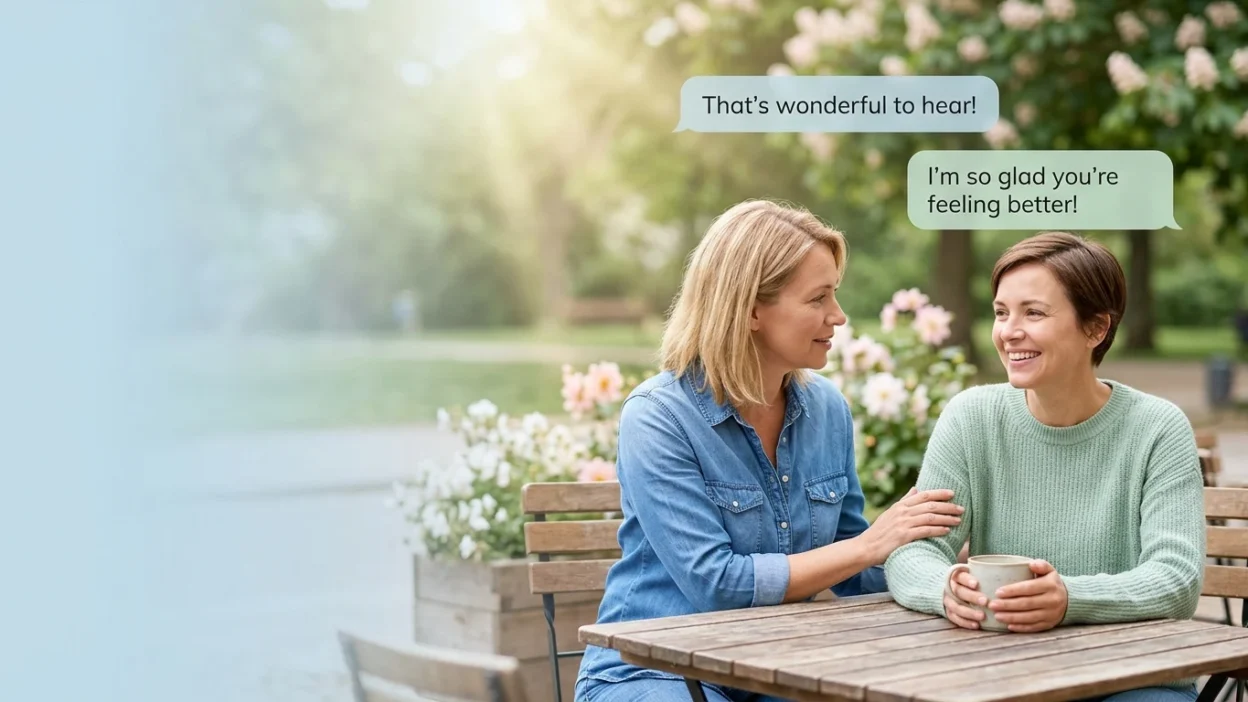
A simple response like “I’m so glad you’re feeling better!” or “That’s wonderful to hear!” is warm, supportive, and appropriate in most situations.
2. How do you reply professionally when someone says they’re feeling better?
You can say, “I’m glad to hear you’re doing better. Wishing you continued good health.” This sounds polite and professional.
3. Can I reply with humor?
Yes. If you know the person well, playful responses like “Great! The world missed your energy!” can make them smile.
4. Should I ask a follow-up question?
Absolutely. Asking “How are you feeling today?” or “Are you back to normal now?” shows genuine interest and keeps the conversation going.
5. What’s a caring reply for someone recovering from illness?
A thoughtful response is “I’m really happy you’re feeling better. Keep taking it easy and continue looking after yourself.”
Conclusion
Finding the best replies to I’m feeling better now doesn’t have to be difficult. If you want to sound caring, encouraging, funny, or professional, the right response can brighten someone’s day and make them feel supported.
Choose words that fit your relationship and the situation, stay genuine, and don’t be afraid to add a personal touch. Even a simple, heartfelt message can make someone’s recovery feel even more meaningful.

Levi Jack is a creative writer and conversation expert passionate about helping people communicate confidently. At ReplyCorner, he shares charming, witty, and engaging reply ideas that make everyday conversations more enjoyable and memorable.