
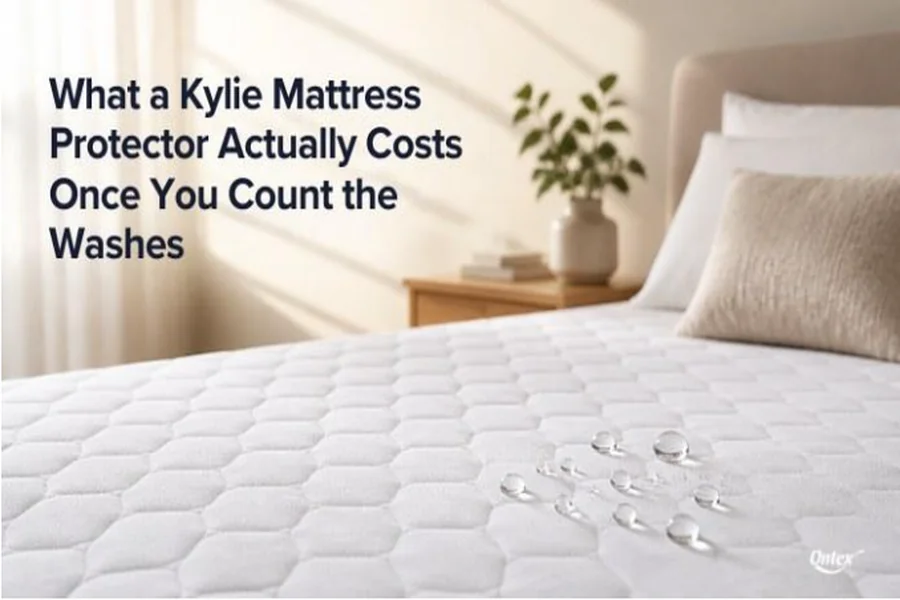
A Kylie mattress protector runs $40 or more, while a pack of disposables sits around half that. Most people grab the cheaper option at the chemist, and honestly, it’s hard to blame them (funny how price tags never mention the washing machine).
The sticker price only tells you what you’ll pay today. It leaves out the hot washes, the power, and the four or five replacement packs you’ll buy over 12 months. Once you count all of that, the cheapest continence products on the shelf tend to cost the most on the calendar.
We’re Ontex Healthcare, and we’ve been supplying Kylie and iD bed pads across Australia for over 40 years. We put this guide together so you can see the full picture before your next purchase.
You’ll get the per-night cost of a Kylie and the laundry bill behind each wash. We’ll also cover how CAPS funding can ease your incontinence budget. First up, the price tag.
What Does a Kylie Mattress Protector Cost Per Night?
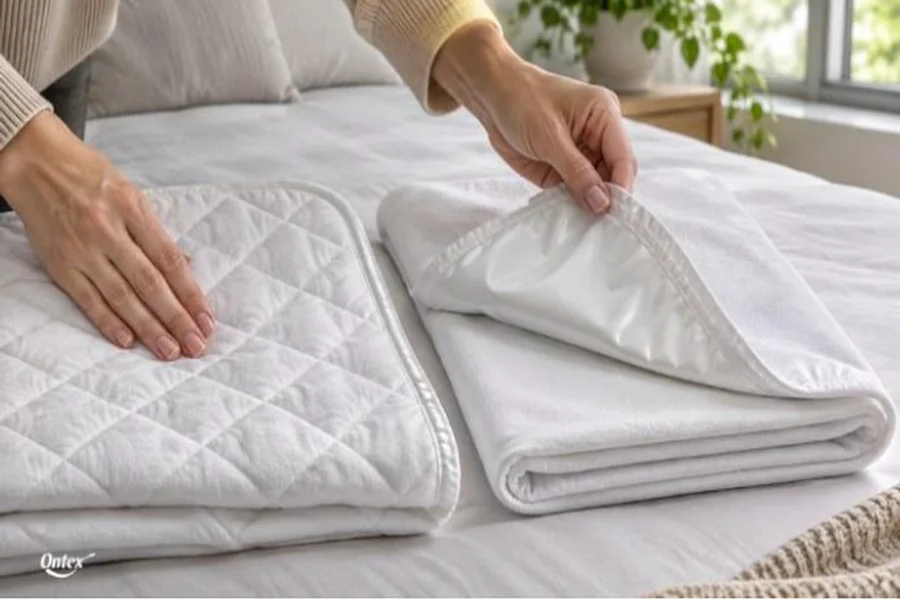
A Kylie Supreme pad sells for between $43 and $80 at Australian retailers, with the standard and Mac models sitting at different price points. That feels steep for one reusable bed protector. Spread across its rated life of up to 300 washes, though, a $60 Kylie works out to about 20 cents each time you wash it.
So how does that play out across a normal week? Seven nights on one pad comes to roughly $1.40 before you add laundry. That’s less than a single disposable each night.
Now, those 20 cents hold steady whether you wash the pad once a day or twice. But if your loved one needs two changes a night, you’ll hit that wash limit in about 10 months instead of two-plus years on a rotation. At that point, the nightly figure doubles because you’re replacing the protector on a much shorter cycle.
Once you’ve got your per-night figure, the next question is which Kylie belongs on your bed.
Kylie Supreme vs Supreme Mac: Is Waterproof Backing Worth It?
The Supreme Mac builds waterproof backing into the pad itself, so you won’t need a separate layer underneath. The standard Kylie Supreme skips that, which means you’ll pair it with a Kylie Draw Mac or Draw Sheet to keep the mattress dry.
The table below breaks down the two models side by side:
| Kylie Supreme | Kylie Supreme Mac | |
| Waterproof layer | No, needs a separate waterproof underlay | Yes, built-in |
| Tuck-in wings | Yes | Yes |
| Drainage pockets | No | Yes, helps the pad dry sooner after each wash |
| Extra items needed | Kylie Draw Mac (32-38) or Draw Sheet (13-26) | None |
| Typical AU price | 43-80 | 53-99 |
The right pick depends on your bed setup. From what we’ve seen in home care, the standard Supreme paired with a separate underlay works well on adjustable beds. A thicker all-in-one pad tends to bunch where the mattress bends, and that bunching can let liquid pool in one spot.
If your bed lies flat, however, the Supreme Mac saves you from buying and washing a second item. And that cuts your laundry load in half.
Both models absorb up to 2,500 ml of fluid and handle a 65°C wash cycle, so your sheets stay dry through the night regardless of which one you choose.
What Does Home Laundry Cost for Washable Bed Pads?
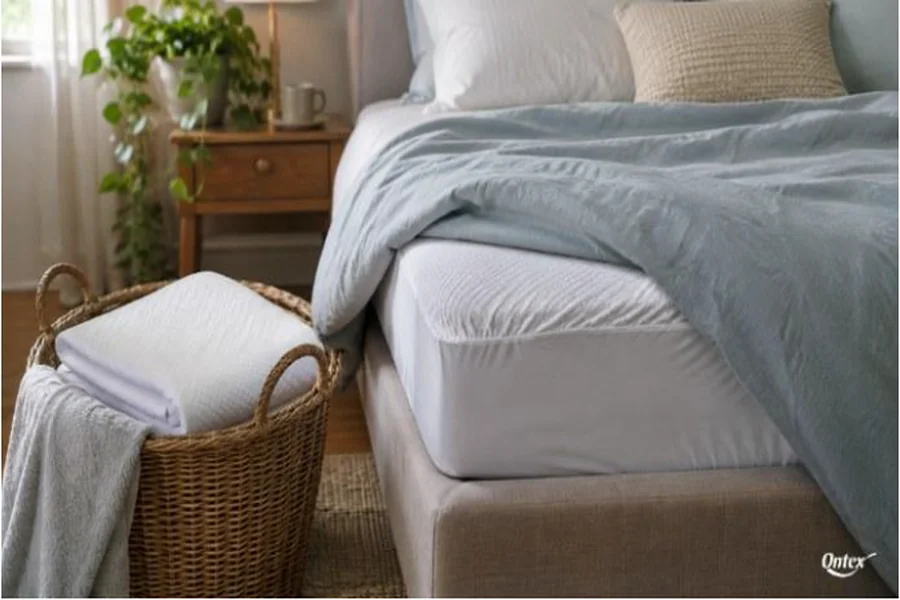
Every washable bed pad carries a laundry cost that never appears on the price tag. And yes, your power bill will notice when the washer starts running every single morning. That’s because Kylie pads need a cold rinse followed by a 65°C hot cycle for hygiene, which draws more energy than a regular cold wash.
The five costs behind a single load of incontinence laundry include:
- Hot Cycle Power: A warm or hot wash uses most of its energy heating the water. You can calculate the running cost of each wash using your machine’s star rating and your electricity rate.
- Water Per Load: A front loader uses about 55 litres per cycle, while a top loader can use double that. Your machine’s WELS star rating and size affect how many litres each cycle uses.
- Detergent Costs: A mild, non-biological powder or liquid is all you need. Fabric softener is off limits for Kylie pads, so you’ll save money there.
- Tumble Dryer Power: Funnily enough, the dryer tends to cost more per cycle than the washer itself. Drying at low to medium heat (Kylie’s recommended setting) adds around 40 to 80 cents each time.
- Clothesline Drying: On a sunny January morning, a Brisbane clothesline dries a Kylie pad before lunch. Line drying removes the dryer’s share from every wash entirely.
Across a full week, laundry adds somewhere between $3 and $7 to your reusable pad costs. These may look like small amounts on their own, but they belong in the yearly total.
Why Do Cheaper Continence Products Cost More Over 12 Months?
With the per-night and per-wash figures sorted, the full-year picture starts to look quite different. Think of it like $5 servo thongs versus a $40 pair of sandals that lasts three summers. The thongs wear through in weeks, so you keep buying new pairs.
But a Kylie built for 300 washes will still be doing its job long after three or four rounds of cheaper alternatives have gone in the bin.
Washable pads and chair protectors are built for exactly that kind of repeated use. So the next question is how many you’ll need in rotation, and how long each one will hold up.
How Many Protectors Does a Weekly Rotation Need?
Plan on at least three Kylie Supremes in rotation: one on the bed, one in the wash, and one spare. Two can leave you short on nights when your family member needs a second change, or during an Australian winter when nothing dries before morning.
Trust us, a third pad costs far less than a night of broken rest. If you only own two and both are damp at 2 am, you’re left stripping sheets and scrubbing the mattress. At $60 each, three pads come to about $180 up front. Yet the per-night cost stays at roughly 20 cents because the washes are spread across the full set.
Signs Your Washable Pad Needs Replacing
A pad can still look clean and feel soft, but a damp sheet underneath tells a different story. The signs to watch for are a thinning absorbent layer, liquid reaching through to the bed, and a stiff or cracked waterproof backing.
And more often than not, those signs show up because of how the pad gets washed. Fabric softener is the habit we see wreck pads early. It coats the fibres, and liquid ends up sitting on top instead of soaking in. Bleach and high dryer heat do similar damage.
If you skip those three products and wash a soiled Kylie within a few hours, you’ll get closer to that full rated life. Your cost per night stays low as a result.
How Do Disposables Stack Up Over a Year?
For nightly use, a washable set tends to finish the year cheaper than disposables. A single iD Expert Protect disposable pad costs around $1.30, which totals roughly $475 over 365 nights.
This way, a three-pad Kylie rotation at $180 plus around $5 a week in laundry comes to about $440 for year one. The gap widens in year two, because the Kylie set keeps going while the disposable bill resets.
Cost isn’t the only reason to keep both options on hand. Maybe you’re heading to the Sunshine Coast for the weekend? A few iD Expert Protect pads in the boot save you carting wet washables home. Disposables still earn their place for travel and short respite stays, so it isn’t an all-or-nothing choice.
Can CAPS Funding Help Pay for Your Continence Aids at Home?
CAPS puts $739.40 a year back into your incontinence budget for the 2026-27 period. The Continence Aids Payment Scheme covers any continence products you choose, including washable bed pads, disposable protectors, pull-ups, pants and absorbent sheets.
To qualify, your GP or continence nurse will need to confirm a permanent bladder or bowel diagnosis. You then apply through Services Australia, and payment lands in your nominated bank account (CAPS isn’t backdated, so every month you wait is money left on the table).
And since July 2026, eligible Australians can receive CAPS while accessing aged care through Support at Home or the Commonwealth Health Support Programme.
Of course, every household’s sums look a little different, which is where free expert advice helps.
Still Doing the Sums? Call the National Continence Helpline
You’ve seen what a Kylie costs per night, what laundry adds to each bed change, and how CAPS can ease your incontinence budget. Stretching every dollar across your family’s care is hard work (and it shouldn’t cost anyone a comfortable night’s sleep).
If you’d like confidential incontinence advice on which continence products and protectors suit your situation, give the National Continence Helpline a free call on 1800 33 00 66. The service is run by Continence Health Australia and staffed by continence nurses, Monday to Friday, 8 am to 8 pm AEST.
When you’re ready to build your pad rotation with confidence, the Kylie range at Ontex Healthcare is a good place to start.