
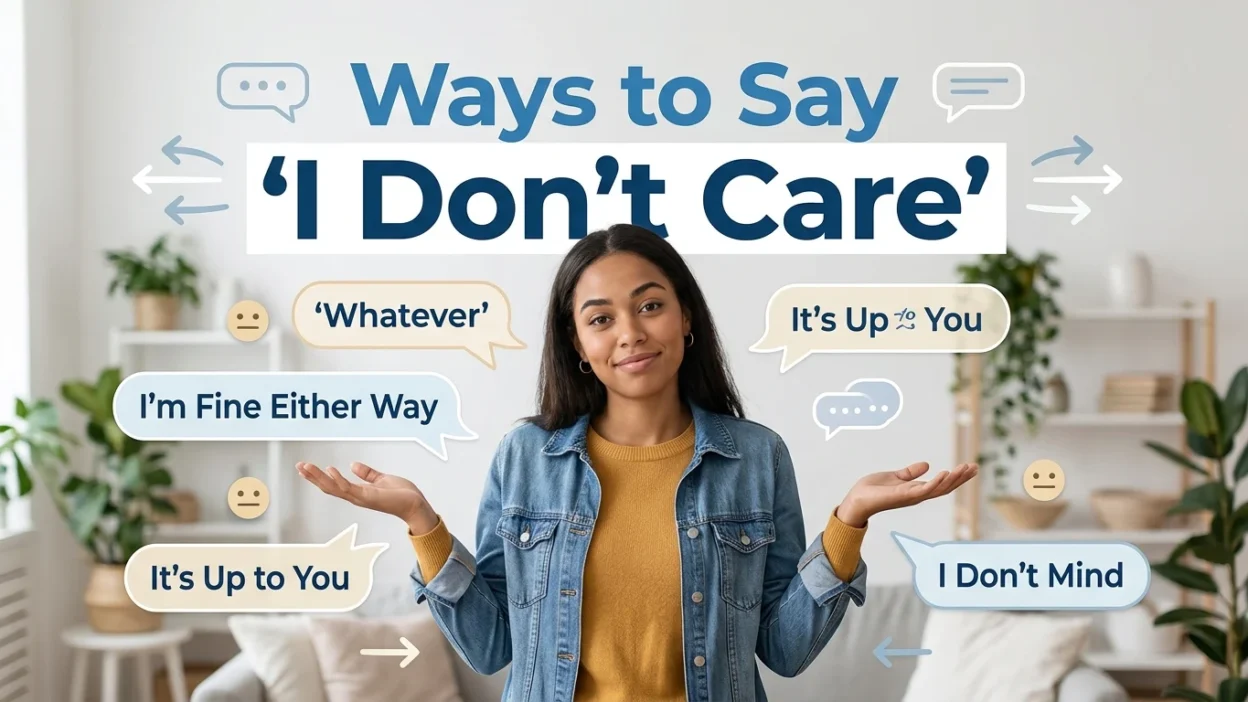
Sometimes, saying “I don’t care” can sound too blunt, cold, or even rude. The good news is that you can express the same feeling in many different ways depending on the situation. If you want to sound polite, casual, confident, funny, or completely uninterested, choosing the right words can make your message much more natural.
These ways to say “I don’t care” can help you communicate indifference without creating unnecessary tension. From professional alternatives such as “I have no preference” to casual phrases like “Whatever works,” there is an option for almost every conversation.
1. I Have No Preference
This is one of the safest and most polite ways to express that you do not particularly care about the choice.
Best for: Professional conversations, planning, and everyday situations.
Alternative: Either option is fine with me.
Examples:
- “I have no preference, so you can choose the restaurant.”
- “I have no preference about which day we meet.”
2. Whatever Works for You
This phrase shows that you are flexible and happy to let someone else decide.
Best for: Friends, coworkers, and casual planning.
Alternative: Whatever suits you.
Examples:
- “Whatever works for you is fine with me.”
- “Pick whichever time works for you.”
3. It’s Up to You
This is a simple way to hand the decision over to another person.
Best for: Everyday conversations when you genuinely have no preference.
Alternative: You decide.
Examples:
- “It’s up to you where we go for dinner.”
- “It’s up to you; I’m good either way.”
4. I’m Fine Either Way
This phrase communicates indifference while still sounding friendly.
Best for: Situations involving two or more reasonable choices.
Alternative: Either way works for me.
Examples:
- “I’m fine either way, so choose the movie.”
- “Morning or afternoon is fine either way.”
5. I Don’t Mind
“I don’t mind” is a gentle alternative that avoids sounding dismissive.
Best for: Polite and casual conversations.
Alternative: That’s fine with me.
Examples:
- “I don’t mind where we eat.”
- “I don’t mind if you invite them.”
6. Either Is Fine
This short response makes it clear that both options are acceptable.
Best for: Quick decisions and casual discussions.
Alternative: Both options work.
Examples:
- “Tea or coffee? Either is fine.”
- “We can go today or tomorrow. Either is fine.”
7. I’m Not Bothered
This expression suggests that the situation does not concern or inconvenience you.
Best for: Casual conversations, especially with friends.
Alternative: It doesn’t bother me.
Examples:
- “I’m not bothered about where we sit.”
- “I’m not bothered if we arrive a little late.”
8. It Doesn’t Matter to Me
This is a direct but relatively neutral way to communicate indifference.
Best for: Everyday conversations when you want to be straightforward.
Alternative: It makes no difference to me.
Examples:
- “It doesn’t matter to me which restaurant we choose.”
- “It doesn’t matter to me what time we leave.”
9. I’m Indifferent
“Indifferent” is a more formal word for having little or no particular feeling about something.
Best for: Formal writing and thoughtful conversations.
Alternative: I have no strong feelings about it.
Examples:
- “I’m indifferent about which option we select.”
- “Honestly, I’m indifferent to the outcome.”
10. I Have No Strong Feelings About It
This phrase sounds thoughtful rather than dismissive.
Best for: Sensitive conversations where you want to avoid sounding rude.
Alternative: I’m neutral about it.
Examples:
- “I have no strong feelings about the proposal.”
- “I have no strong feelings about which design you choose.”
11. I’m Neutral on That
This is a calm way to say that you do not strongly support or oppose something.
Best for: Discussions, debates, and professional situations.
Alternative: I’m neutral about it.
Examples:
- “I’m neutral on that issue.”
- “I’m neutral on which candidate we choose for the project.”
12. I’ll Leave That Decision to You
This makes your lack of preference sound respectful and cooperative.
Best for: Professional settings and group decisions.
Alternative: I’ll let you decide.
Examples:
- “I’ll leave that decision to you since you know the area better.”
- “I’ll leave the final choice to you.”
13. You Can Choose
Sometimes the clearest response is also the simplest.
Best for: Casual conversations and quick decisions.
Alternative: Go with whatever you prefer.
Examples:
- “You can choose the movie tonight.”
- “You can choose where we have lunch.”
14. Whatever You Prefer
This phrase puts the other person’s preference first.
Best for: Polite conversations with friends, family, or coworkers.
Alternative: Whatever you like.
Examples:
- “Whatever you prefer is fine with me.”
- “We can meet whenever you prefer.”
15. I’m Easy
In informal English, “I’m easy” can mean that you are flexible about a decision.
Best for: Very casual conversations.
Alternative: I’m flexible.
Examples:
- “Where should we eat? I’m easy.”
- “What time should we meet? I’m easy.”
16. I’m Flexible
This is a positive alternative to saying that you do not care.
Best for: Work schedules, appointments, plans, and arrangements.
Alternative: My schedule is open.
Examples:
- “I’m flexible about the meeting time.”
- “I’m flexible, so choose whatever works best.”
17. I’m Good With Anything
This friendly phrase shows that almost any reasonable option works for you.
Best for: Food, entertainment, travel, and casual plans.
Alternative: Anything works for me.
Examples:
- “What should we order? I’m good with anything.”
- “Where should we go? I’m good with anything.”
18. Anything Works for Me
This is a natural way to express complete flexibility.
Best for: Everyday planning.
Alternative: I’m happy with whatever you choose.
Examples:
- “Any restaurant works for me.”
- “Anything works for me as long as we leave before noon.”
19. I Could Go Either Way
This phrase indicates that you do not have a strong preference.
Best for: Casual discussions involving two choices.
Alternative: I’m okay with either option.
Examples:
- “I could go either way on the new design.”
- “I could go either way—pizza or burgers sound good.”
20. I’m Not Too Concerned About It
This is a softer version of saying that something does not matter much to you.
Best for: Professional or sensitive situations.
Alternative: It’s not a major concern for me.
Examples:
- “I’m not too concerned about the exact color.”
- “I’m not too concerned about which format we use.”
21. That’s Not Important to Me
This phrase clearly communicates that the subject is not a priority.
Best for: When you want to focus attention on something more important.
Alternative: That isn’t a priority for me.
Examples:
- “The brand isn’t important to me.”
- “That detail isn’t important to me right now.”
22. It’s Not a Big Deal to Me
This casual phrase shows that you do not consider something significant.
Best for: Friends, family, and relaxed conversations.
Alternative: I’m not worried about it.
Examples:
- “It’s not a big deal to me if we change the plan.”
- “Missing that event isn’t a big deal to me.”
23. I’m Not Invested in It
This suggests that you do not have a strong emotional or personal interest in the outcome.
Best for: Discussions where emotional involvement matters.
Alternative: I don’t have a personal stake in it.
Examples:
- “I’m not invested in which team wins.”
- “I’m not invested in the argument, so you two can decide.”
24. I’m Not Worried About It
This phrase communicates that something does not concern you.
Best for: Reassuring conversations and everyday situations.
Alternative: I’m not concerned about it.
Examples:
- “I’m not worried about what they think.”
- “I’m not worried about the small details.”
25. I’m Unbothered
“Unbothered” is a modern, confident way to communicate that something does not affect you.
Best for: Casual conversations, social media, and confident responses.
Alternative: It doesn’t affect me.
Examples:
- “They can complain all they want; I’m unbothered.”
- “Everyone has an opinion, but I’m completely unbothered.”
26. Do Whatever You Want
This phrase can be neutral or slightly annoyed depending on your tone.
Best for: Casual situations when you genuinely want someone else to decide.
Alternative: Do what you think is best.
Examples:
- “You want to change the plan? Do whatever you want.”
- “If you think it’s better, do whatever you want.”
27. Whatever
“Whatever” is one of the shortest ways to express indifference, but it can sound dismissive.
Best for: Very casual conversations when the relationship allows it.
Alternative: Fine by me.
Examples:
- “Whatever, you can pick the movie.”
- “Whatever works. I’m not bothered.”
28. I Honestly Don’t Mind
Adding “honestly” can make the response sound sincere and reassuring.
Best for: When someone keeps asking you to choose.
Alternative: Seriously, either option is fine.
Examples:
- “I honestly don’t mind where we go.”
- “I honestly don’t mind what we have for dinner.”
29. I’m Not Interested in Arguing About It
Sometimes “I don’t care” really means that you do not want to spend energy on an argument.
Best for: Difficult conversations and disagreements.
Alternative: I’d rather not debate it.
Examples:
- “I’m not interested in arguing about who was right.”
- “I’m not interested in arguing about something so minor.”
30. I’ll Let It Go
This phrase communicates that you are choosing not to spend more energy on an issue.
Best for: Arguments, misunderstandings, and emotionally charged situations.
Alternative: I’m choosing not to worry about it.
Examples:
- “We disagree, but I’ll let it go.”
- “It bothered me earlier, but I’ll let it go.”
FAQs:
1. What is a polite way to say “I don’t care”?
A polite option is “I have no preference,” “I don’t mind,” or “Whatever works for you.” These phrases express indifference without sounding unnecessarily harsh.
2. What is a professional way to say “I don’t care”?
Try “I have no strong preference,” “I’m neutral on that,” or “I’m happy with either option.” These alternatives work well in emails, meetings, and workplace conversations.
3. What is a casual way to say “I don’t care”?
You can say “Whatever,” “I’m good with anything,” “It’s up to you,” or “I’m easy.” Keep in mind that “whatever” can sound dismissive depending on your tone.
4. How can I say “I don’t care” without sounding rude?
Focus on flexibility rather than indifference. Phrases such as “Either is fine with me” and “Whatever you prefer” communicate the same idea more warmly.
5. What is a funny way to say “I don’t care”?
For a playful conversation, you could say “Dealer’s choice,” “You pick—I’m just here for the snacks,” or “My opinion has officially left the building.” These work best when the situation is relaxed.
Conclusion
There are many effective ways to say “I don’t care” without repeatedly using those exact words. The best expression depends on your relationship with the other person, the setting, and the tone you want to create. In professional situations, phrases like “I have no preference” and “I’m neutral on that” are safer choices. With friends, casual options such as “Whatever works for you” or “I’m good with anything” sound more natural.
The key is to match your words to the situation. If you want to sound polite, emphasize flexibility; if you want to sound confident, stay calm and direct; and if you are joking with friends, a playful response can make your indifference more entertaining. Choosing the right alternative helps you communicate clearly while avoiding an unnecessarily cold or dismissive tone.

David Owen is a passionate writer and communication enthusiast dedicated to helping readers craft charming, witty, and thoughtful replies. Through ReplyCorner, he shares creative response ideas that make conversations engaging and memorable.