
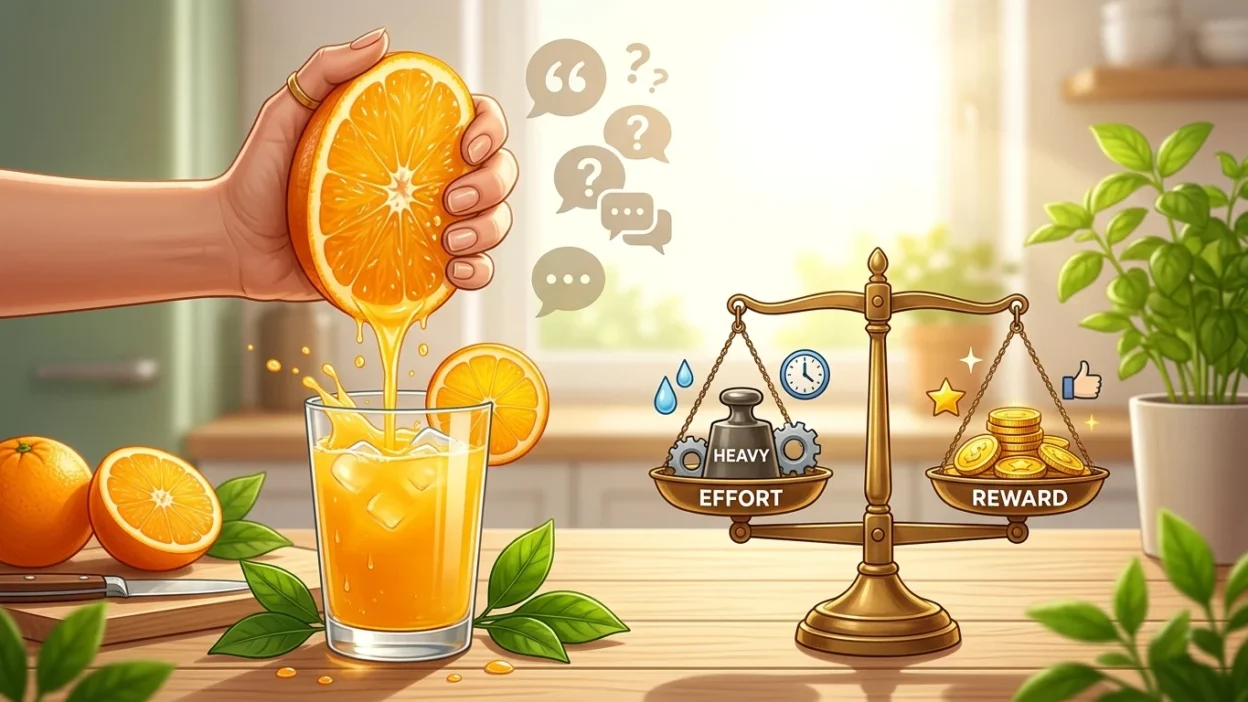
“Is the juice worth the squeeze?” is a popular saying used when you want to know If the reward is worth the time, effort, money, or trouble involved. The phrase creates a simple image: before squeezing a fruit, you may wonder whether you will get enough juice to make the effort worthwhile. In everyday conversations, it means asking, “Is the result worth what I have to put into it?”
If you are looking for sayings like “Is the juice worth the squeeze?”, there are many alternatives that can sound more professional, casual, thoughtful, or humorous. If you are discussing a job, relationship, business decision, project, purchase, or personal goal, these expressions can help you weigh the cost against the benefit and decide whether something is truly worth pursuing.
1. Is It Worth the Effort?
This is one of the closest and clearest alternatives. It directly asks whether the expected result justifies the work required.
Best for: Everyday conversations, work decisions, and personal goals
Alternative: Is the outcome worth the work?
Examples:
“Cleaning the entire garage will take all weekend. Is it worth the effort?”
“Before we start this project, let’s ask whether it is worth the effort.”
2. Is the Reward Worth the Risk?
This saying focuses on possible danger, uncertainty, or loss. It is useful when a decision could have both a major benefit and a serious downside.
Best for: Business choices, investments, and uncertain opportunities
Alternative: Does the potential gain justify the risk?
Examples:
“The investment could bring a large return, but is the reward worth the risk?”
“Moving to a new city is exciting, but you should consider whether the reward is worth the risk.”
3. Is It Worth the Trouble?
“Is it worth the trouble?” is a natural expression for situations that may involve inconvenience, stress, or extra work.
Best for: Casual conversations and minor decisions
Alternative: Is it worth the hassle?
Examples:
“The store is across town. Is the discount worth the trouble?”
“Fixing that old computer may take hours. Is it really worth the trouble?”
4. Is the Game Worth the Candle?
This old-fashioned saying has a similar meaning to “Is the juice worth the squeeze?” It asks whether the result is valuable enough to justify the effort or expense.
Best for: Literary writing, thoughtful discussions, and traditional language
Alternative: Is the result worth the cost?
Examples:
“We have spent months planning this event. Is the game worth the candle?”
“The opportunity sounds interesting, but we should ask whether the game is worth the candle.”
5. Is the Payoff Worth It?
This phrase focuses on the final reward or benefit. It is simple, modern, and easy to understand.
Best for: Work, money, projects, and long-term goals
Alternative: Is the payoff worth the investment?
Examples:
“The course is expensive, but the career benefits may make the payoff worth it.”
“The project will be difficult, so we need to decide whether the payoff is worth it.”
6. Do the Benefits Outweigh the Costs?
This is a more professional and analytical alternative. It compares the advantages with the money, time, effort, or resources required.
Best for: Business meetings, reports, and major decisions
Alternative: Are the advantages greater than the disadvantages?
Examples:
“Before approving the plan, we should determine whether the benefits outweigh the costs.”
“The new system is expensive, but its long-term benefits may outweigh the costs.”
7. Is It Worth the Investment?
This saying is useful when you are considering spending money, time, energy, or resources on something.
Best for: Purchases, education, business, and personal development
Alternative: Will the investment provide enough value?
Examples:
“The training program costs a lot, but it may be worth the investment.”
“Think about whether the new equipment is worth the investment before buying it.”
8. Is It Worth the Hassle?
“Hassle” means unnecessary difficulty, inconvenience, or annoyance. This phrase has a casual and relatable tone.
Best for: Informal conversations and everyday problems
Alternative: Is it worth all the inconvenience?
Examples:
“The refund process is complicated. Is the small amount of money worth the hassle?”
“We could return the item, but I’m not sure it is worth the hassle.”
9. Is the Outcome Worth the Sacrifice?
This expression highlights what you may have to give up to achieve a goal, such as time, comfort, money, or opportunities.
Best for: Personal goals, careers, and meaningful decisions
Alternative: Is the final result worth what you must give up?
Examples:
“Working every weekend may help you succeed, but is the outcome worth the sacrifice?”
“She asked herself whether the promotion was worth the sacrifice of spending less time with family.”
10. Does the End Justify the Means?
This well-known saying asks whether a good result makes the methods used to achieve it acceptable.
Best for: Ethical discussions and serious decisions
Alternative: Is the result important enough to justify the method?
Examples:
“We may reach our goal faster, but does the end justify the means?”
“The plan could solve the problem, but we still need to ask whether the end justifies the means.”
11. Is It Worth the Price?
This phrase is often used when discussing money, but it can also refer to an emotional or personal cost.
Best for: Shopping, financial choices, and valuable opportunities
Alternative: Is the value worth the cost?
Examples:
“This phone has great features, but is it worth the price?”
“The opportunity may come with a personal cost. Is it worth the price?”
12. Is the Return Worth the Effort?
This saying compares the amount you put into something with what you receive in return.
Best for: Business, work, and productivity decisions
Alternative: Will the return justify the work?
Examples:
“The campaign requires a lot of time, but is the return worth the effort?”
“Before expanding the business, we should consider whether the return is worth the effort.”
13. Is the Benefit Worth the Cost?
This is a straightforward cost-benefit expression. It works well when the costs and advantages are easy to compare.
Best for: Professional conversations and practical decisions
Alternative: Does the benefit justify the cost?
Examples:
“The upgrade is expensive, so we need to decide whether the benefit is worth the cost.”
“The service saves time, but is the benefit worth the monthly fee?”
14. Is It Worth Going the Extra Mile?
This phrase asks whether putting in additional effort will create enough value to make that effort worthwhile.
Best for: Work, customer service, and personal improvement
Alternative: Is the extra effort worth it?
Examples:
“We could add more features, but is it worth going the extra mile?”
“Sometimes going the extra mile is worth it when you want to build trust.”
15. Are the Results Worth the Work?
This expression clearly compares effort with the final outcome.
Best for: Projects, education, and long-term plans
Alternative: Will the results justify the work?
Examples:
“The assignment is demanding, but the results may be worth the work.”
“Before starting the renovation, ask whether the results are worth the work.”
16. Is It Worth the Wait?
This saying is used when something requires patience or takes longer than expected.
Best for: Delayed opportunities, products, and long-term goals
Alternative: Will the result be worth waiting for?
Examples:
“The restaurant has a long waiting list, but the food may be worth the wait.”
“Success can take time, so you must decide whether the goal is worth the wait.”
17. Is It Worth the Time and Energy?
This phrase considers two valuable resources: time and personal effort.
Best for: Busy schedules, work tasks, and personal commitments
Alternative: Is the result worth the time and energy required?
Examples:
“I could join another project, but I’m not sure it is worth the time and energy.”
“Before taking on more work, ask whether the opportunity is worth your time and energy.”
18. Is the Prize Worth the Price?
This expression uses rhyme to make the question memorable. It compares a desired reward with the cost of getting it.
Best for: Motivational writing and creative conversations
Alternative: Is the reward worth what it costs?
Examples:
“The promotion sounds great, but is the prize worth the price?”
“Before chasing success, consider whether the prize is worth the price you must pay.”
19. Is the Gain Worth the Pain?
This catchy phrase compares a possible benefit with the difficulty or discomfort involved.
Best for: Fitness, hard work, and motivational discussions
Alternative: Is the benefit worth the struggle?
Examples:
“The workout is challenging, but the gain may be worth the pain.”
“Learning a new skill can be frustrating at first, but the gain is often worth the pain.”
20. Is the Risk Worth Taking?
This phrase asks whether an uncertain action has enough potential value to justify moving forward.
Best for: Career changes, business decisions, and new opportunities
Alternative: Is the possible reward worth the risk?
Examples:
“Starting a new business is uncertain, so you must decide whether the risk is worth taking.”
“The job offer requires a major move. Is the risk worth taking?”
21. Is It Worth the Upset?
This saying focuses on emotional stress, conflict, or frustration.
Best for: Relationships and sensitive situations
Alternative: Is it worth the emotional stress?
Examples:
“Arguing over a small mistake may not be worth the upset.”
“Before responding angrily, ask yourself whether the issue is worth the upset.”
22. Is It Worth the Compromise?
A compromise usually means giving up something to reach an agreement. This phrase asks whether that trade-off is acceptable.
Best for: Relationships, negotiations, and teamwork
Alternative: Is the trade-off worth making?
Examples:
“We may have to reduce the budget, but is the compromise worth it?”
“Both sides should decide whether the agreement is worth the compromise.”
23. Does the Reward Match the Effort?
This expression asks whether the result is fair or proportional to the work involved.
Best for: Work, education, and performance discussions
Alternative: Does the reward reflect the effort?
Examples:
“She worked for months, but the reward did not match the effort.”
“Before accepting the task, ask whether the reward matches the effort.”
24. Is the Trade-Off Worth It?
A trade-off means gaining one thing while losing another. This phrase helps you evaluate both sides of a decision.
Best for: Lifestyle, career, and financial choices
Alternative: Is what you gain worth what you give up?
Examples:
“The new job pays more, but the longer commute may not make the trade-off worth it.”
“Living in the city offers convenience, but you must decide whether the higher cost is worth the trade-off.”
25. Does It Make Sense in the Long Run?
This saying encourages people to think beyond immediate results and consider long-term value.
Best for: Planning, investments, and future goals
Alternative: Will this decision be worthwhile over time?
Examples:
“The plan is difficult now, but it may make sense in the long run.”
“Before making a major purchase, consider whether it makes sense in the long run.”
26. Is It Worth the Grind?
“The grind” refers to repetitive, tiring, or demanding work. This phrase has a modern and casual tone.
Best for: Career goals, side projects, and hard work
Alternative: Is the hard work worth the reward?
Examples:
“Building a successful business takes years. Is the goal worth the grind?”
“The side job is exhausting, but the extra income may be worth the grind.”
27. Is the Destination Worth the Journey?
This thoughtful saying compares the final goal with everything required to reach it.
Best for: Personal growth, travel, careers, and life goals
Alternative: Is the final destination worth the journey?
Examples:
“The path to success may be difficult, but the destination could be worth the journey.”
“Before making a major life change, ask whether the destination is worth the journey.”
28. Is It Worth the Stress?
This expression asks whether a possible reward is valuable enough to justify mental pressure or worry.
Best for: Workload, relationships, and demanding commitments
Alternative: Is the result worth the pressure?
Examples:
“The deadline is creating a lot of stress. Is the project worth it?”
“The promotion offers more money, but you should ask whether it is worth the stress.”
29. Will It Pay Off in the End?
This phrase looks toward future results. It is often used when the reward is not immediate.
Best for: Long-term goals, education, and business plans
Alternative: Will the effort bring a worthwhile result later?
Examples:
“Studying every day is difficult, but it may pay off in the end.”
“The project requires patience, yet the hard work could pay off in the end.”
30. Is the Squeeze Worth the Juice?
This playful reverse version keeps the same idea while changing the wording. It can add humor or variety to a familiar phrase.
Best for: Casual conversations and lighthearted writing
Alternative: Is the effort worth the reward?
Examples:
“This project has become complicated. Is the squeeze worth the juice?”
“We have already invested so much time, but is the squeeze still worth the juice?”
FAQs:
What does “Is the juice worth the squeeze?” mean?
“Is the juice worth the squeeze?” means asking whether the reward, benefit, or result is worth the effort, cost, time, or trouble required to achieve it.
What is another way to say “Is the juice worth the squeeze?”
Common alternatives include “Is it worth the effort?”, “Is it worth the trouble?”, “Is the payoff worth it?”, and “Do the benefits outweigh the costs?”
Is “Is the juice worth the squeeze?” a common saying?
Yes. It is a widely understood informal expression, especially in conversations about whether a task, opportunity, or decision is worthwhile.
Can I use this phrase in professional writing?
You can use it in casual workplace conversations, marketing content, or informal presentations. For formal reports, phrases such as “Do the benefits outweigh the costs?” may sound more professional.
What is the opposite of “Is the juice worth the squeeze?”
An opposite idea would be “The juice is not worth the squeeze,” meaning the reward is too small to justify the effort, cost, or difficulty involved.
Conclusion
Sayings like “Is the juice worth the squeeze?” are useful because they help us think carefully about effort, reward, cost, risk, and value. If you are deciding about a new job, a major purchase, a difficult project, or a personal goal, these expressions make it easier to ask an important question: Is the result truly worth what it will take to achieve it?
The best alternative depends on your situation. Use “Is it worth the effort?” for simple conversations, “Do the benefits outweigh the costs?” for professional decisions, or “Is the destination worth the journey?” when discussing long-term goals. Choosing the right phrase can make your message clearer, more relatable, and more meaningful.

Levi Jack is a creative writer and conversation expert passionate about helping people communicate confidently. At ReplyCorner, he shares charming, witty, and engaging reply ideas that make everyday conversations more enjoyable and memorable.