
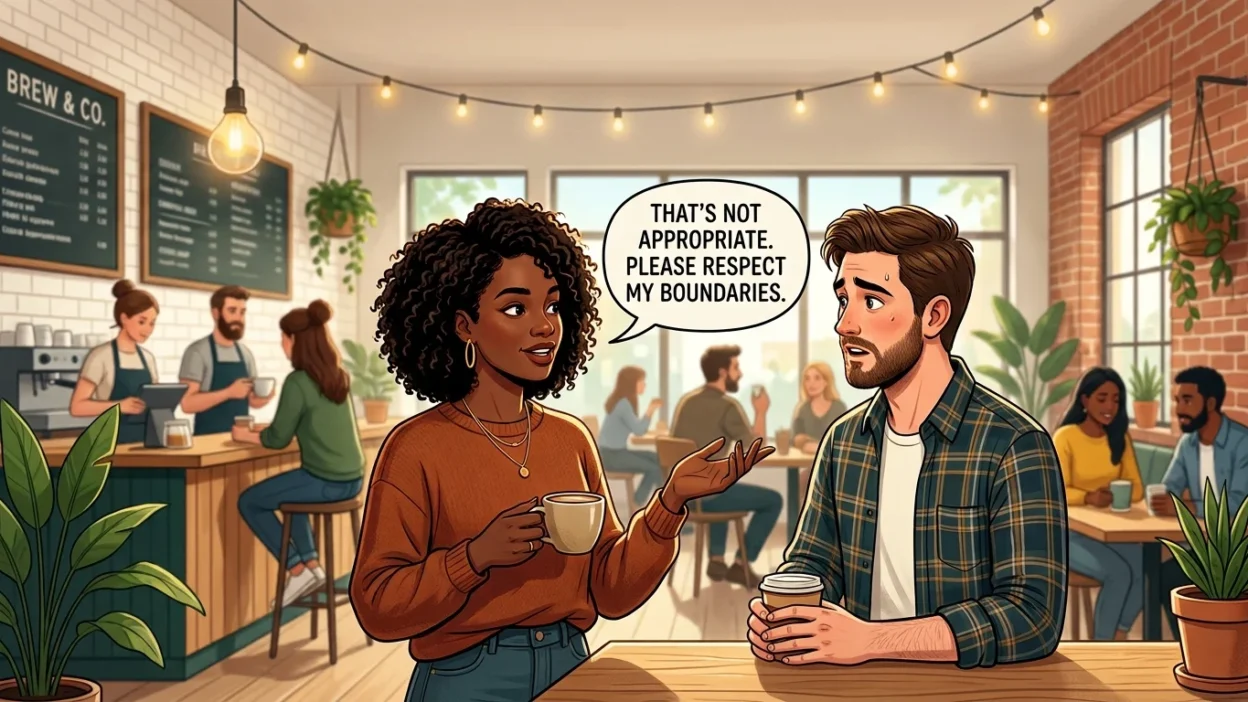
Inappropriate comments can happen anywhere—at work, school, family gatherings, online, or during casual conversations. Sometimes the comment is rude, offensive, intrusive, or simply makes you uncomfortable. Knowing the best responses to inappropriate comments can help you protect your boundaries without feeling pressured to start an argument.
The right reply depends on the situation. You may want to stay calm, use humor, directly call out the behavior, or simply end the conversation. Below are smart, polite, assertive, funny, and confident ways to respond when someone crosses the line.
1. “That Comment Wasn’t Appropriate.”
Sometimes, the simplest response is the most effective. Calmly pointing out the problem can make the other person reconsider what they said.
Best for: Clear boundary setting
Alternative: “I don’t think that was appropriate to say.”
Examples:
“That comment was inappropriate, and I’d appreciate it if you didn’t say things like that to me.”
“I’m not comfortable with that comment.”
2. “What Do You Mean by That?”
Asking someone to explain themselves can be a powerful response. It puts the responsibility back on them and may expose why the comment was inappropriate.
Best for: Making someone reflect on their words
Alternative: “Can you explain what you mean?”
Examples:
“What exactly do you mean by that?”
“I’m curious—what was the point of that comment?”
3. “I Don’t Find That Funny.”
People sometimes hide rude comments behind jokes. You do not have to laugh just because someone says they were “only joking.”
Best for: Inappropriate jokes
Alternative: “I don’t see what’s funny about that.”
Examples:
“I know you may think it’s funny, but I don’t.”
“That joke makes me uncomfortable.”
4. “Please Don’t Comment on My Personal Life.”
Personal questions and opinions can easily cross boundaries. A direct but respectful response can stop the conversation.
Best for: Intrusive personal comments
Alternative: “That’s personal, and I’d rather not discuss it.”
Examples:
“I prefer to keep that part of my life private.”
“That’s not something I’m comfortable talking about.”
5. “That’s a Strange Thing to Say Out Loud.”
This response is slightly witty while still calling attention to the inappropriate behavior.
Best for: Unexpectedly rude comments
Alternative: “Did you really mean to say that?”
Examples:
“Wow, that’s a strange thing to say to someone.”
“Interesting choice of words.”
6. “I’m Going to Pretend You Didn’t Say That.”
Sometimes you do not want to give a rude comment more attention than it deserves.
Best for: Mildly offensive remarks
Alternative: “Let’s move on from that.”
Examples:
“I’m going to give you a chance to rethink that comment.”
“Let’s pretend that sentence never happened.”
7. “Please Respect My Boundaries.”
Healthy communication requires boundaries. You have every right to let someone know when they have crossed one.
Best for: Repeated inappropriate behavior
Alternative: “I need you to respect my boundaries.”
Examples:
“I’ve made my boundary clear, so please respect it.”
“I’m not okay with comments like that.”
8. “Why Would You Say Something Like That?”
This response encourages the other person to think before continuing.
Best for: Hurtful or insensitive comments
Alternative: “What made you think that was okay to say?”
Examples:
“Why would you say that to me?”
“What response were you expecting from that comment?”
9. “That’s Not Your Business.”
Some questions are simply too personal. You do not owe everyone an explanation.
Best for: Nosy questions
Alternative: “I’d rather keep that private.”
Examples:
“That’s personal, so I’m keeping it to myself.”
“I don’t discuss that with everyone.”
10. “I’m Not Comfortable With This Conversation.”
This is a mature way to express discomfort without becoming aggressive.
Best for: Uncomfortable conversations
Alternative: “I’d like to change the subject.”
Examples:
“This conversation is making me uncomfortable.”
“I don’t want to continue talking about this.”
11. “Let’s Keep It Respectful.”
A short and confident response can immediately reset the tone of the conversation.
Best for: Rude or disrespectful remarks
Alternative: “Please speak to me respectfully.”
Examples:
“We can disagree without being disrespectful.”
“Let’s keep this conversation respectful.”
12. “That’s Not Something You Should Say to People.”
Sometimes people genuinely need to hear that their words crossed a line.
Best for: Educating someone about inappropriate language
Alternative: “You may want to rethink saying things like that.”
Examples:
“That kind of comment can make people uncomfortable.”
“You should probably avoid saying that to others.”
13. “I Don’t Appreciate That.”
This classic response is polite, direct, and easy to use in almost any situation.
Best for: Everyday inappropriate remarks
Alternative: “I’d appreciate it if you didn’t say that.”
Examples:
“I don’t appreciate comments about my appearance.”
“I don’t appreciate being spoken to that way.”
14. “That Crossed a Line.”
You do not always need to explain every detail. A short statement can communicate exactly how you feel.
Best for: Clearly offensive comments
Alternative: “You’ve crossed a boundary.”
Examples:
“That crossed a line for me.”
“I’m not okay with where this conversation is going.”
15. “I’m Not Going to Respond to That.”
Refusing to engage can be a powerful way to deal with inappropriate remarks.
Best for: Attention-seeking or provocative comments
Alternative: “I’m not entertaining that conversation.”
Examples:
“I’m choosing not to respond to that.”
“That doesn’t deserve a response from me.”
16. “Can We Change the Subject?”
Not every uncomfortable moment requires confrontation. Sometimes redirecting the conversation is the easiest option.
Best for: Social gatherings and casual conversations
Alternative: “Let’s talk about something else.”
Examples:
“I’d rather change the subject.”
“Can we move on to something less personal?”
17. “I Don’t Think You Realize How That Sounds.”
This response gives the person a chance to reflect without immediately escalating the situation.
Best for: Thoughtless comments
Alternative: “You might want to think about how that sounds.”
Examples:
“I’m not sure you realize how that came across.”
“That sounded more offensive than you may have intended.”
18. “That’s Not a Conversation I Want to Have.”
You are allowed to choose which conversations you participate in.
Best for: Personal or sensitive topics
Alternative: “I’m not discussing that.”
Examples:
“I’d rather not have this conversation.”
“That topic is off-limits for me.”
19. “Excuse Me?”
A simple response can sometimes make someone immediately realize they said something inappropriate.
Best for: Shockingly rude comments
Alternative: “Did I hear that correctly?”
Examples:
“Excuse me, what did you just say?”
“Could you repeat that?”
20. “I Expect to Be Treated With Respect.”
This response is confident without being unnecessarily aggressive.
Best for: Workplace or serious situations
Alternative: “I expect respectful communication.”
Examples:
“I’m happy to talk, but I expect to be treated respectfully.”
“You can make your point without insulting me.”
21. “That Comment Says More About You Than Me.”
This confident comeback can help you avoid taking an insult personally.
Best for: Insults and unnecessary criticism
Alternative: “I’m not going to take that personally.”
Examples:
“If that’s how you choose to speak to people, that’s your decision.”
“I’m comfortable with who I am.”
22. “I’m Not Interested in Your Opinion on That.”
Not every opinion needs to be accepted, discussed, or debated.
Best for: Unwanted criticism
Alternative: “I didn’t ask for feedback on that.”
Examples:
“I’m not looking for opinions about my choices.”
“Thanks, but I’m not asking for advice.”
23. “You Seem Very Comfortable Saying Inappropriate Things.”
This response uses a little sarcasm while still addressing the behavior.
Best for: Repeated rude comments
Alternative: “You really don’t have a filter, do you?”
Examples:
“That’s certainly a bold thing to say.”
“You seem unusually comfortable crossing boundaries.”
24. “I Think We’re Done With This Conversation.”
Sometimes the best response is to end the interaction completely.
Best for: Escalating conversations
Alternative: “I’m ending this conversation now.”
Examples:
“I don’t see any reason to continue this discussion.”
“We’re done talking about this.”
25. “That Was Unnecessary.”
A short response can be enough to call out a rude or hurtful remark.
Best for: Random insults or criticism
Alternative: “There was no need for that.”
Examples:
“That comment was completely unnecessary.”
“I’m not sure what you hoped to achieve by saying that.”
26. “Please Think Before You Speak.”
This direct reply works when someone repeatedly says careless or offensive things.
Best for: Thoughtless remarks
Alternative: “You should think about how your words affect people.”
Examples:
“Please think before making comments like that.”
“Words have consequences, so choose them carefully.”
27. “I’m Not the Right Person for This Conversation.”
This response helps you step away without turning the situation into a bigger conflict.
Best for: Avoiding unnecessary arguments
Alternative: “You’ll need to discuss that with someone else.”
Examples:
“I’m not interested in being part of this conversation.”
“I think you should talk to someone else about that.”
28. “That Made Me Uncomfortable.”
Being honest about your feelings can be more effective than trying to come up with the perfect comeback.
Best for: Honest and direct communication
Alternative: “That comment made me uncomfortable.”
Examples:
“I want you to know that what you said made me uncomfortable.”
“Please don’t make comments like that around me.”
29. “I’m Going to Walk Away Now.”
You do not have to stay in a conversation that feels disrespectful or unsafe.
Best for: Ending an uncomfortable interaction
Alternative: “I’m removing myself from this conversation.”
Examples:
“I don’t want to continue this, so I’m leaving.”
“I’m going to step away now.”
30. “No, That’s Not Okay.”
Sometimes the strongest response is also the simplest. You do not need a clever comeback to defend your boundaries.
Best for: Serious or clearly inappropriate comments
Alternative: “Absolutely not.”
Examples:
“No, that’s not okay with me.”
“That behavior is unacceptable.”
How to Choose the Best Response to an Inappropriate Comment
The best response depends on who made the comment and where it happened. A rude joke from a friend may only require a calm correction, while repeated inappropriate behavior at work may require a firmer response or documentation.
Try to choose a reply that matches your comfort level. You can be polite, assertive, humorous, direct, or simply walk away. The most important thing is that you do not feel obligated to laugh, explain yourself, or tolerate disrespectful behavior.
FAQs:
What is the best way to respond to an inappropriate comment?
A calm and direct response is often best. You can say, “That comment was inappropriate,” “I’m not comfortable with that,” or “Please don’t speak to me that way.”
How do you respond to inappropriate comments without being rude?
Focus on the behavior instead of attacking the person. Use phrases such as, “I don’t appreciate that comment,” or “Let’s keep this conversation respectful.”
What should I say when someone makes an inappropriate joke?
You can say, “I don’t find that funny,” or ask, “What do you mean by that?” Both responses make it clear that you are not comfortable with the joke.
Is it okay to ignore an inappropriate comment?
Yes. You do not have to respond to every rude remark. Ignoring the comment, changing the subject, or walking away can sometimes be the best option.
How do I respond if someone keeps making inappropriate comments?
Be more direct and clearly state your boundary. If the behavior continues, limit contact when possible and consider reporting the issue when it occurs in a workplace, school, or other formal environment.
Conclusion
Knowing the best responses to inappropriate comments can help you handle uncomfortable conversations with more confidence. If you choose a polite reply, a firm boundary, a witty comeback, or simply walk away, you have the right to decide what behavior you will accept.
You do not need to have the perfect response every time. Sometimes a simple “That’s not okay,” “I’m uncomfortable with that,” or “Please don’t speak to me that way” is more than enough. Choose the response that feels right for the situation, protect your peace, and remember that setting boundaries is not the same as being rude.

David Owen is a passionate writer and communication enthusiast dedicated to helping readers craft charming, witty, and thoughtful replies. Through ReplyCorner, he shares creative response ideas that make conversations engaging and memorable.