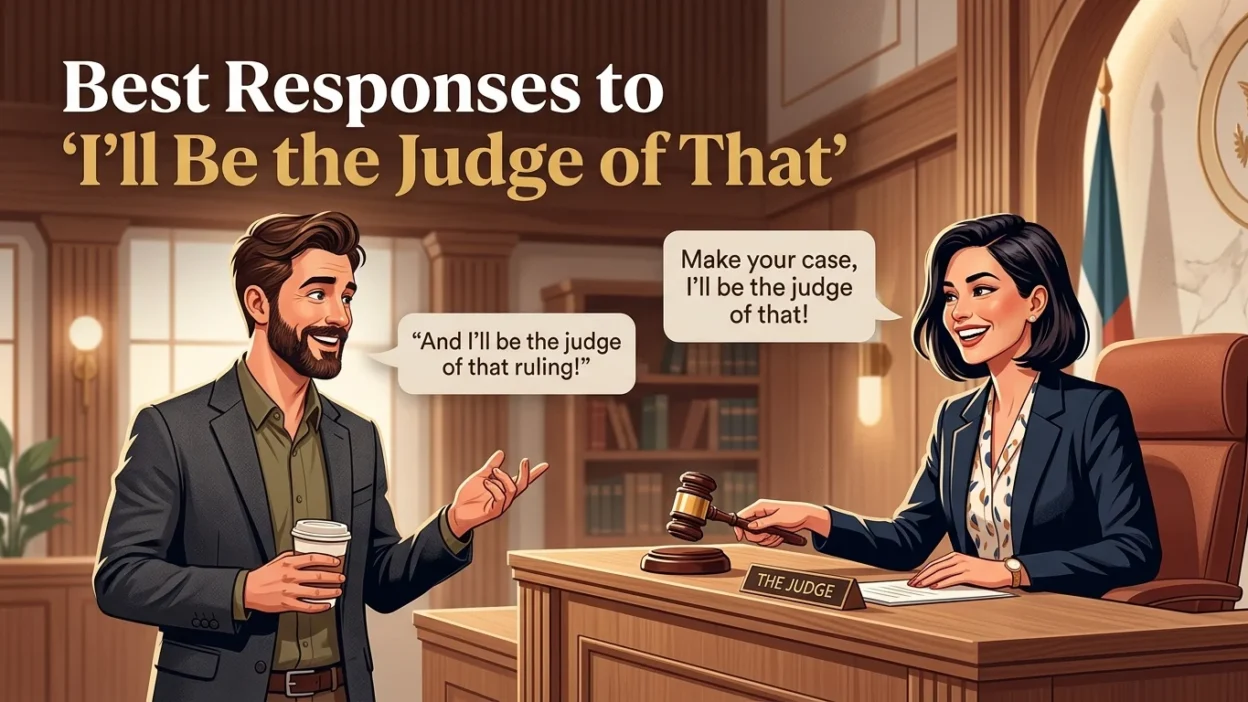
When someone says “I’ll be the judge of that,” they usually mean they want to decide for themselves whether something is true, good, impressive, or worth believing. Depending on the situation, the phrase can sound playful, skeptical, teasing, or slightly challenging.
The right response depends on your relationship and the mood of the conversation. If you want a funny comeback, clever reply, confident response, sarcastic answer, or playful retort, this guide gives you plenty of natural options. Each response is designed to help you keep the conversation light while matching the other person’s tone.
1. “Then Judge Carefully”
Best for: A confident and playful response.
Alternative: “Take your time with the verdict.”
Examples:
“Then judge carefully—I have a reputation to maintain.”
“Go ahead, but make sure you judge fairly.”
2. “The Floor Is Yours”
Best for: A friendly, relaxed conversation.
Alternative: “You have the stage.”
Examples:
“The floor is yours, Your Honor.”
“Go ahead, the court is officially in session.”
3. “I’ll Try to Impress You”
Best for: A charming or slightly flirty exchange.
Alternative: “I hope I pass your test.”
Examples:
“I’ll try to make a good impression.”
“Hopefully, I earn a passing grade.”
4. “Don’t Be Too Harsh”
Best for: A playful situation where someone is teasing you.
Alternative: “Please judge with kindness.”
Examples:
“Don’t be too harsh; I’m sensitive.”
“Be gentle with that verdict.”
5. “I’m Ready for Your Verdict”
Best for: Confidently accepting the challenge.
Alternative: “Let’s hear your judgment.”
Examples:
“I’m ready for your verdict whenever you are.”
“Okay, Judge, let’s hear what you’ve got.”
6. “Judge Away”
Best for: A short and confident comeback.
Alternative: “Go ahead and decide.”
Examples:
“Judge away—I can handle it.”
“Sure, judge away. I’m not worried.”
7. “I’ll Accept the Verdict”
Best for: Keeping the conversation mature and lighthearted.
Alternative: “I’ll respect your decision.”
Examples:
“I’ll accept whatever verdict you reach.”
“Fine, I’ll trust the judgment of the court.”
8. “Make It a Fair Trial”
Best for: A funny courtroom-style comeback.
Alternative: “At least hear my defense.”
Examples:
“Just make sure I get a fair trial.”
“I demand a lawyer before the verdict!”
9. “I Have Nothing to Hide”
Best for: A confident response.
Alternative: “You’ll see for yourself.”
Examples:
“I have nothing to hide, so judge away.”
“You’ll find out soon enough.”
10. “The Evidence Will Speak”
Best for: A clever and slightly dramatic response.
Alternative: “The proof is coming.”
Examples:
“The evidence will speak for itself.”
“Just wait until the evidence arrives.”
11. “Hope I Get a Good Score”
Best for: Friendly teasing.
Alternative: “Hopefully, I pass.”
Examples:
“Hope I get at least an A.”
“I’m hoping your judgment comes with a good score.”
12. “Don’t Judge Too Quickly”
Best for: When someone seems skeptical.
Alternative: “Give me a chance to prove it.”
Examples:
“Don’t judge too quickly—you might be surprised.”
“Wait for the full story before deciding.”
13. “I’ll Take That Challenge”
Best for: A confident or competitive exchange.
Alternative: “Challenge accepted.”
Examples:
“I’ll take that challenge and prove my point.”
“Challenge accepted. Let the judging begin.”
14. “You Might Be Impressed”
Best for: Showing confidence without sounding arrogant.
Alternative: “You may like what you see.”
Examples:
“You might actually be impressed.”
“Something tells me the verdict will be positive.”
15. “Your Standards Are High”
Best for: Playful teasing.
Alternative: “I see someone has high expectations.”
Examples:
“Your standards are high. I respect that.”
“Wow, someone is serious about judging.”
16. “I’ll Let You Decide”
Best for: A calm and respectful response.
Alternative: “You can make the call.”
Examples:
“I’ll let you decide once you’ve seen everything.”
“Fair enough, you can make the final call.”
17. “Just Remember I’m Innocent”
Best for: Funny courtroom humor.
Alternative: “Innocent until proven otherwise.”
Examples:
“Just remember, I’m innocent until proven guilty.”
“Your Honor, I would like to plead innocent.”
18. “Bring Your Best Judgment”
Best for: A confident and humorous comeback.
Alternative: “I hope your judging skills are sharp.”
Examples:
“Bring your best judgment—I’m ready.”
“Let’s see how good your judging skills really are.”
19. “I’m Not Worried”
Best for: A bold, self-assured response.
Alternative: “I’m confident about the outcome.”
Examples:
“I’m not worried about your verdict.”
“I have a feeling I’ll pass your inspection.”
20. “You’ll Have to See for Yourself”
Best for: Situations where someone doubts your claim.
Alternative: “Seeing is believing.”
Examples:
“You’ll have to see for yourself before deciding.”
“Don’t take my word for it—see what you think.”
21. “Make Sure You’re Objective”
Best for: A witty response to someone being overly critical.
Alternative: “Try to keep your judgment unbiased.”
Examples:
“Just make sure you’re being objective.”
“Please leave personal bias out of the courtroom.”
22. “I’m Ready to Be Evaluated”
Best for: A humorous, confident tone.
Alternative: “Let the evaluation begin.”
Examples:
“I’m ready to be evaluated whenever you are.”
“Alright, let the official inspection begin.”
23. “You Better Be a Good Judge”
Best for: Friendly banter.
Alternative: “No pressure, Judge.”
Examples:
“You better be a good judge after all this talk.”
“No pressure, but your reputation is on the line.”
24. “I Trust Your Judgment”
Best for: A respectful and positive response.
Alternative: “I’ll leave the decision to you.”
Examples:
“I trust your judgment, so let’s see what you decide.”
“I’ll leave the final decision in your hands.”
25. “I Hope You’re Ready”
Best for: A confident challenge.
Alternative: “Hope you can handle it.”
Examples:
“I hope you’re ready for what you’re about to see.”
“Make sure you’re prepared before delivering that verdict.”
26. “Careful, You Might Like It”
Best for: Flirty or playful conversations.
Alternative: “You might end up changing your mind.”
Examples:
“Careful—you might actually be impressed.”
“Don’t be surprised if your verdict is unexpectedly positive.”
27. “The Judge Has Spoken”
Best for: Humorously accepting someone’s decision.
Alternative: “Case closed, I suppose.”
Examples:
“The judge has spoken. I guess that settles it.”
“Case closed! I’ll respect the ruling.”
28. “I’ll Make My Case”
Best for: Confident discussions or debates.
Alternative: “Let me present my evidence.”
Examples:
“Give me a moment to make my case.”
“I have plenty of evidence to support my argument.”
29. “Verdict Pending”
Best for: A short, witty response.
Alternative: “Awaiting the final decision.”
Examples:
“Verdict pending. I’ll try not to panic.”
“I guess we’re waiting for the official ruling.”
30. “Just Don’t Be Shocked by the Results”
Best for: A bold, funny, or confident comeback.
Alternative: “The results may surprise you.”
Examples:
“Just don’t be shocked when I exceed expectations.”
“Prepare yourself—the final verdict might surprise you.”
FAQs:
1. What does “I’ll be the judge of that” mean?
It means someone wants to decide for themselves whether something is true, good, impressive, or acceptable. It can be serious, playful, skeptical, or teasing depending on the context.
2. What is a funny response to “I’ll be the judge of that”?
You can say, “Just remember, I’m innocent until proven guilty!” Another funny option is, “No pressure, Your Honor.”
3. What is a confident response to “I’ll be the judge of that”?
Try “You’ll have to see for yourself” or “I’m not worried about the verdict.” These replies show confidence without becoming overly defensive.
4. What is a flirty response to “I’ll be the judge of that”?
A playful option is “Careful, you might actually be impressed.” You could also say, “I hope I pass your test.”
5. How should I respond if someone says it sarcastically?
Match their energy without becoming rude. Try something witty such as “Then make sure your judgment is fair” or “I’ll let the evidence speak for itself.”
Conclusion
The best responses to “I’ll be the judge of that” depend on the tone and relationship you have with the other person. A confident reply works well when someone is challenging you, while a funny comeback can turn the phrase into playful banter. If the conversation is flirty, something like “Careful, you might be impressed” can keep things interesting.
The key is to respond naturally rather than trying too hard. Whether you choose a clever comeback, funny response, confident reply, sarcastic retort, or playful answer, the best response is one that fits the moment and keeps the conversation enjoyable.

Levi Jack is a creative writer and conversation expert passionate about helping people communicate confidently. At ReplyCorner, he shares charming, witty, and engaging reply ideas that make everyday conversations more enjoyable and memorable.