
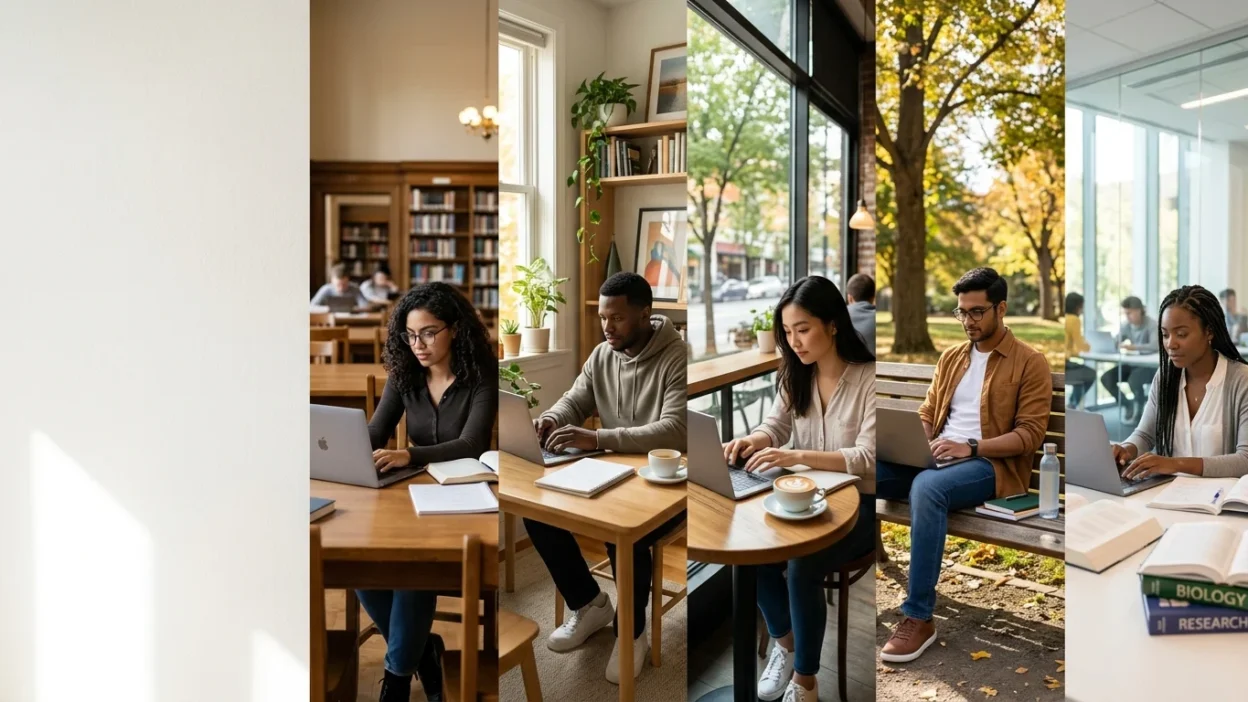
Finding the Best Places for Someone to Study helps you build better focus, productivity, and learning while creating lasting success every day. Choosing the right study place and study environment makes effective learning easier for every student, freelancer, and lifelong learner. In my experience, matching your learning styles with the right location and daily schedule is one of the smartest ways to achieve your goals, gain more knowledge, and avoid burnout through a comfortable workspace.
Among the top places, quiet libraries, libraries, coffee shops, home study spaces, and campus study rooms stand out because these study-friendly places and study rooms provide unique benefits.
A calm, comfortable, peaceful, and distraction-free environment helps reduce distractions, encourages deep focus, improves concentration, and enhances mental clarity. Whether you prefer home or other locations, the right setting also supports information retention, helps you retain information, and makes longer study sessions feel more productive.
A practical guide is to discover the study spaces that offer the most comfort and naturally support your routine. The right place improves motivation, learning success, academic success, consistency, efficiency, and overall performance. As you keep studying, you will notice how the many benefits of a well-planned study environment boosts confidence and make every session more enjoyable.
1. Home Study Desk
Best for: Daily study routines and long study sessions.
Alternative: A quiet corner in your bedroom.
Examples:
- Organize a desk with books, a laptop, and good lighting.
- Study every evening at the same desk to build consistency.
A dedicated home workspace minimizes distractions and creates a productive habit over time.
2. Public Library
Best for: Silent studying and deep concentration.
Alternative: University library.
Examples:
- Review lecture notes in the quiet reading section.
- Prepare for final exams without household distractions.
Libraries provide one of the most peaceful environments for focused learning.
3. University Library
Best for: College and university students.
Alternative: Campus study hall.
Examples:
- Research using academic journals.
- Reserve a private study room for group projects.
University libraries offer valuable learning resources alongside quiet spaces.
4. Coffee Shop
Best for: Creative thinking and casual studying.
Alternative: Tea café.
Examples:
- Write essays while enjoying coffee.
- Review flashcards during a quiet afternoon.
Many students enjoy the gentle background noise that coffee shops provide.
5. Study Room
Best for: Group discussions and collaborative learning.
Alternative: Meeting room.
Examples:
- Practice presentations with classmates.
- Solve math problems together.
Private study rooms encourage teamwork without disturbing others.
6. Quiet Bedroom
Best for: Late-night studying.
Alternative: Guest room.
Examples:
- Read textbooks before bedtime.
- Complete online courses in peace.
A clean, quiet bedroom can become an effective study area.
7. School Classroom After Hours
Best for: Homework and revision.
Alternative: Empty lecture room.
Examples:
- Stay after class to finish assignments.
- Review today’s lesson while it’s fresh.
Familiar surroundings can help reinforce learning.
8. Campus Study Lounge
Best for: Short study breaks between classes.
Alternative: Student center.
Examples:
- Read notes before your next lecture.
- Complete quick quizzes between classes.
Study lounges combine convenience with comfort.
9. Bookstore Reading Area
Best for: Reading and research.
Alternative: Community bookstore.
Examples:
- Browse educational books.
- Discover new learning resources.
Bookstores inspire curiosity and continuous learning.
10. Community Learning Center
Best for: Free educational resources.
Alternative: Adult education center.
Examples:
- Attend tutoring sessions.
- Join study workshops.
These centers often provide supportive learning environments.
11. Local Park
Best for: Reading in fresh air.
Alternative: Botanical garden.
Examples:
- Read literature under a tree.
- Review vocabulary during a sunny afternoon.
Nature can reduce stress while improving focus.
12. Botanical Garden
Best for: Relaxed studying.
Alternative: Public garden.
Examples:
- Memorize notes surrounded by greenery.
- Brainstorm project ideas outdoors.
Natural settings can refresh your mind.
13. Quiet Café
Best for: Freelancers and remote learners.
Alternative: Bakery café.
Examples:
- Watch online lectures.
- Edit research papers.
A calm café balances comfort and productivity.
14. Coworking Space
Best for: Adult learners and professionals.
Alternative: Shared office.
Examples:
- Study for certification exams.
- Attend virtual classes.
Coworking spaces provide reliable internet and professional surroundings.
15. Empty Conference Room
Best for: Workplace learning.
Alternative: Office meeting room.
Examples:
- Complete corporate training.
- Study during lunch breaks.
Quiet office spaces can be ideal for focused learning.
16. Museum Reading Area
Best for: History and art students.
Alternative: Cultural center.
Examples:
- Research historical topics.
- Sketch artwork for assignments.
Museums encourage inspiration and creativity.
17. Rooftop Terrace
Best for: Short revision sessions.
Alternative: Balcony.
Examples:
- Review flashcards outdoors.
- Read while enjoying fresh air.
Changing scenery helps prevent study fatigue.
18. Student Lounge
Best for: Collaborative learning.
Alternative: Common room.
Examples:
- Discuss assignments.
- Practice language conversations.
Student lounges support both studying and networking.
19. Empty Dining Hall
Best for: Early morning study.
Alternative: Cafeteria before busy hours.
Examples:
- Finish homework before breakfast.
- Review notes with minimal distractions.
Large open spaces often remain quiet during off-hours.
20. Hotel Lobby
Best for: Travelers and business students.
Alternative: Hotel business center.
Examples:
- Attend virtual lectures.
- Prepare presentations while traveling.
Many hotel lobbies offer comfortable seating and Wi-Fi.
21. Beachside Bench
Best for: Reading and reflection.
Alternative: Lakeside seating.
Examples:
- Read novels during vacation.
- Review language lessons outdoors.
Natural sounds can create a relaxing study atmosphere.
22. Local Community Hall
Best for: Group study events.
Alternative: Recreation center.
Examples:
- Organize exam preparation sessions.
- Host educational workshops.
Community halls provide spacious study environments.
23. Church or Religious Library
Best for: Quiet reading.
Alternative: Meditation center.
Examples:
- Study philosophy books.
- Read in a peaceful setting.
These places often offer calm and respectful environments.
24. Train Station Waiting Area
Best for: Studying while commuting.
Alternative: Airport lounge.
Examples:
- Review flashcards before boarding.
- Read articles during waiting time.
Even short study sessions can be productive.
25. Outdoor Picnic Table
Best for: Casual studying.
Alternative: Garden bench.
Examples:
- Practice handwriting exercises.
- Read science chapters outdoors.
Fresh air often boosts mental energy.
26. Friend’s House
Best for: Accountability study sessions.
Alternative: Family member’s home.
Examples:
- Prepare together for exams.
- Quiz each other using flashcards.
Studying with motivated friends improves consistency.
27. Online Virtual Study Room
Best for: Remote learners.
Alternative: Video study group.
Examples:
- Join virtual Pomodoro sessions.
- Study alongside international students.
Virtual communities help maintain motivation.
28. Learning Center
Best for: Tutoring support.
Alternative: Academic support center.
Examples:
- Receive one-on-one guidance.
- Practice difficult subjects.
Professional assistance can accelerate learning.
29. School Courtyard
Best for: Quick revision.
Alternative: Campus garden.
Examples:
- Read notes before class.
- Memorize formulas during breaks.
Outdoor campus areas offer a refreshing study environment.
30. Dedicated Home Library
Best for: Serious learners and book lovers.
Alternative: Personal reading room.
Examples:
- Build a distraction-free study routine.
- Store all learning materials in one place.
A personal library creates an ideal long-term learning space.
FAQs:
1. What is the best place for someone to study?
A quiet, comfortable location with minimal distractions, such as a library or dedicated home study desk, is usually the best choice.
2. Is studying at a coffee shop effective?
Yes. Many people enjoy the moderate background noise, which can improve focus and creativity.
3. Should I study at home or in a library?
If your home is quiet and distraction-free, it’s an excellent option. If not, a library often provides a better study environment.
4. Can outdoor places improve studying?
Yes. Parks, gardens, and other peaceful outdoor locations can reduce stress and improve concentration for reading or reviewing notes.
5. How can I make any place better for studying?
Keep your phone on silent, organize your study materials, use comfortable seating, ensure good lighting, and eliminate unnecessary distractions.
Conclusion
Choosing the best places for someone to study isn’t about finding one perfect location—it’s about discovering the environment where you feel most focused, comfortable, and motivated. If you prefer the silence of a library, the energy of a coffee shop, the comfort of your home, or the calm of a park, the right study space can improve productivity and make learning more enjoyable. Experiment with different locations, build a consistent routine, and create an environment that supports your academic and personal goals.

Levi Jack is a creative writer and conversation expert passionate about helping people communicate confidently. At ReplyCorner, he shares charming, witty, and engaging reply ideas that make everyday conversations more enjoyable and memorable.